
How transnational capital directs United States power to dismantle sovereign development models and preserve global economic control
United States policy functions as an extension of transnational capital interests operating through state machinery. A coherent reading of recent geopolitical developments requires attention to structural power rather than electoral cycles or stated doctrine. Analysis grounded in policy continuity, material interests, and institutional behaviour indicates a persistent alignment in which the state operates under the direction and influence of transnational capital. That alignment moves through a network of policy institutions, financial actors, and political structures which sustain continuity across administrations regardless of electoral change.
Pressure directed at China cannot be reduced to containment of a rising competitor. The underlying objective concerns preservation of a system where capital concentration remains anchored within a narrow transnational elite network. That system depends upon unrestricted access to markets, resources, labour pools, and financial circuits. Any sovereign model capable of internalising these functions presents a structural threat to that architecture. China’s development model, combining state direction with industrial sovereignty and controlled capital flows, establishes an alternative that reduces external dependency. That alternative extends beyond economics into governance structures, monetary systems, and technological sovereignty. The emerging pattern shows coordinated pressure applied across Eurasian powers, with China positioned as the central long-term target, while intermediate theatres such as Iran and Russia operate within a broader sequence of operations executed in a cumulative and deliberate manner over extended time horizons.
The argument advanced by independent political analyst, Brian Berletik, rests on the proposition that the United States functions as a state whose policy direction is shaped by corporate and financial interests requiring continuous expansion of profit and power. Policy papers provide the operational blueprint for this expansion, translating long-term objectives into actionable doctrine. Institutions such as the Brookings Institution and the RAND Corporation have produced detailed frameworks outlining sequential strategies, including regime change pathways, economic disruption, and indirect warfare. These frameworks persist across administrations, with each government advancing the same agenda through different tactical phases.
The campaign against Iran demonstrates this continuity in granular form. The 2009 Brookings study outlined a multi-layered approach combining diplomacy, sanctions, covert action, and direct military force. Subsequent developments reflect execution across phases rather than isolated events. The dismantling of Syrian air defence systems created operational corridors. Israeli strikes functioned as preliminary escalatory tests. Diplomatic engagement established narrative cover, framing escalation as reactive rather than planned. The present conflict represents a later phase within a longer sequence, rather than a discrete war. Diplomacy operates within this structure as a pretext mechanism, creating justification for escalation while maintaining plausible deniability.
Iran occupies a central role within a wider Eurasian strategy that extends towards Russia and China. Statements attributed to Wesley Clark outlined a sequence of targeted states culminating in confrontation with Moscow and Beijing. Developments since 2011 align with that trajectory. The reconfiguration of the Arab world, pressure applied to Iran, and the proxy war in Ukraine form a continuous chain of operations. Each stage weakens a node within a broader network, preparing conditions for subsequent actions. The sequencing is cumulative, with earlier operations enabling later ones through infrastructure degradation, political destabilisation, and strategic isolation.
The Russian theatre reflects application of indirect pressure as described in RAND frameworks. Energy exports, peripheral instability, and proxy conflict serve as leverage points. The conflict in Ukraine absorbs Russian military capacity while sanctions and covert actions target energy infrastructure and export routes. Reports of drone strikes against deep Russian territory and maritime attacks on energy shipments indicate execution of these strategies. The objective extends beyond Russia itself, aiming to limit its ability to support partners and to fracture the wider Eurasian alignment that underpins multipolar development.
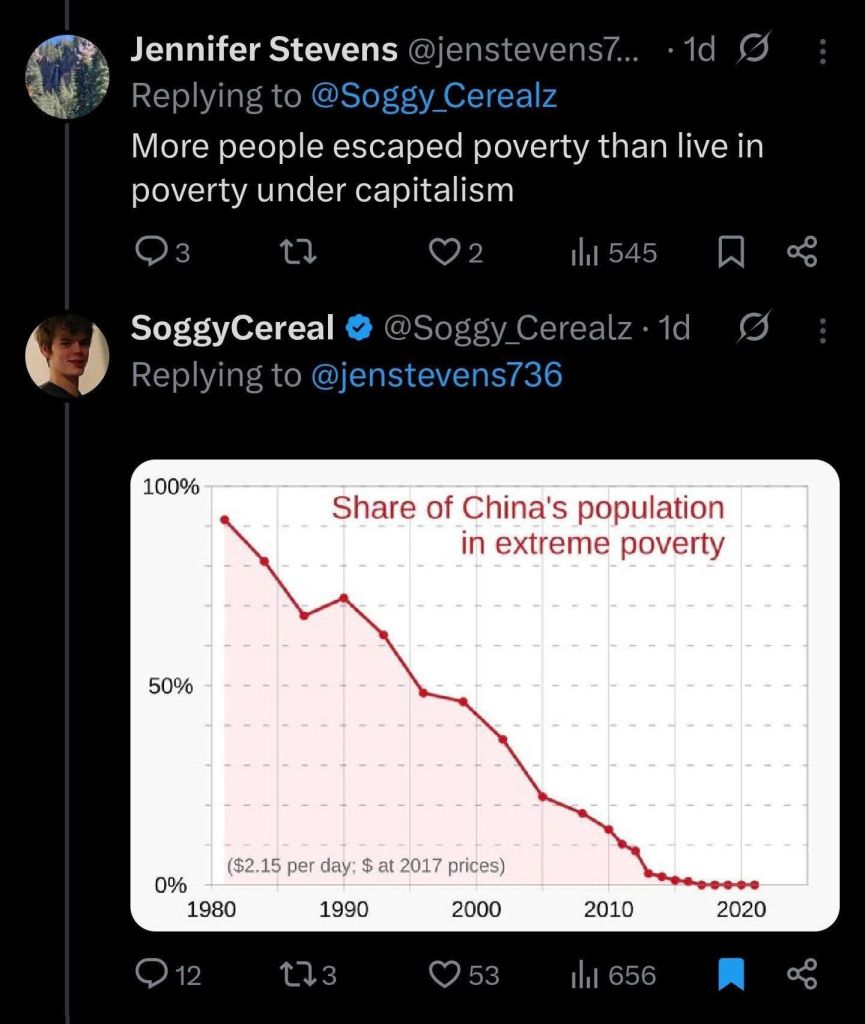
China represents the principal strategic concern within this structure. Its economic model integrates industrial production, infrastructure development, and financial instruments into a system capable of sustaining autonomy. The Belt and Road Initiative reduces reliance on maritime routes vulnerable to interdiction, while domestic industrial capacity limits exposure to external supply chains. Financial mechanisms challenge dollar dominance through alternative payment systems and development financing. These elements collectively undermine the leverage historically exercised by transnational capital through control of trade routes, finance, and production.
Strategic urgency arises from the projected timeline of Chinese development. Estimates placing irreversible economic and industrial parity within a decade compress the window for disruption. Actions taken against Iran, Venezuela, and Russian energy infrastructure align with this timeline. Energy supply chains feeding China face systematic disruption across multiple regions. Venezuelan exports have been constrained, Russian production targeted, and Middle Eastern flows destabilised through conflict. The cumulative effect resembles a distributed blockade achieved through indirect means rather than formal declaration.
The concept of a maritime energy blockade remains central. Direct enforcement would constitute an overt act of war, requiring alternative methods. Incremental disruption through regional conflict, infrastructure attacks, and proxy operations achieves similar outcomes while maintaining deniability. The reduction in energy production across Iran, Qatar, and other regional producers diminishes available exports even where shipping routes remain open. The effect is a gradual constriction of supply, limiting Chinese access without triggering formal escalation thresholds.
Operational constraints shape the execution of this strategy. The United States faces measurable shortages in critical munitions, particularly air defence interceptors. Prior commitments in Yemen and Ukraine depleted stockpiles, leaving limited capacity for sustained high-intensity operations. Iranian missile forces have adapted by pacing launches, maintaining steady pressure that exploits these shortages. Increasing penetration rates indicate degradation of defensive systems. The destruction of advanced radar installations, including limited-number strategic assets, compounds these vulnerabilities. Naval and air platforms show signs of strain, with maintenance requirements increasing as operational tempo rises.
Industrial limitations reinforce these constraints. Production of advanced systems depends on materials such as gallium and antimony, where supply chains are heavily concentrated in China. This creates a structural contradiction in pursuing confrontation while relying on adversary-controlled inputs. Expansion of domestic production remains constrained by time, cost, and existing industrial capacity. These factors limit the ability to sustain simultaneous conflicts across multiple theatres.
Military overstretch emerges as a defining feature. Resources allocated to Iran, Ukraine, and broader global commitments stretch logistics, maintenance cycles, and deployment readiness. Carrier groups require rotation and repair. Aircraft operate at extended ranges, increasing strain on refuelling and maintenance systems. The strategy compensates through proxy utilisation and selective escalation, though these introduce additional uncertainty and reduce direct control over outcomes.
Economic warfare complements military operations through targeted disruption of infrastructure. In Iran, hydrocarbon facilities provide approximately half of government revenue, making them critical targets. Attacks on energy production, water systems, and transport infrastructure extend pressure beyond military capacity into civilian stability. Similar patterns appear in attacks on pipeline networks linked to Chinese supply routes in regions such as Myanmar and Pakistan. These actions aim to degrade both immediate economic output and long-term development potential.
Narrative management operates alongside these measures. The use of proxy actors allows attribution to be deflected while maintaining operational direction. Israel functions within this framework as a forward actor whose actions can be publicly separated from United States policy when required. Diplomatic engagement reinforces this structure by presenting escalation as reactive. Internal political developments, including selective resignations and public dissent, function within controlled boundaries that redirect blame without altering policy direction.
Domestic political cohesion within the United States remains aligned with these objectives. Both major parties operate within a framework shaped by financial and corporate interests. Campaign financing, lobbying structures, and institutional pathways ensure continuity of policy regardless of electoral outcomes. Media systems reinforce this alignment by framing strategic objectives as national interests. Public opposition remains fragmented and managed within existing structures, limiting its impact on policy direction.
The broader agenda extends beyond containment of China as a single actor. The objective concerns preservation of a global system in which transnational capital maintains dominant control over economic, financial, and technological networks. This system increasingly incorporates digital infrastructure as a mechanism of governance. Financial systems are transitioning towards programmable architectures, enabling monitoring and control over transactions and capital flows. A fragmented global environment reduces the effectiveness of such systems, while a unified or aligned framework enhances enforceability.
Control within this system depends on minimising leakage. Parallel financial networks, independent industrial bases, and alternative technological ecosystems create spaces outside centralised oversight. China’s model introduces such spaces at scale, combining industrial autonomy, financial alternatives, and technological development. Efforts to constrain semiconductor access, restrict technological transfer, and disrupt supply chains reflect attempts to prevent consolidation of these independent systems.
Military conflict, economic pressure, and digital integration operate as interconnected instruments within this framework. Conflict environments justify expansion of control mechanisms, including financial restrictions and regulatory oversight. Economic disruption creates conditions that increase dependence on centralised systems. Digital infrastructure provides the means to enforce compliance. The interaction of these elements produces a cumulative effect aimed at consolidating control while reducing the capacity for independent action by sovereign states.
China’s response reflects preparation for sustained systemic competition. Energy diversification, including nuclear expansion and renewable development, reduces reliance on external sources. Domestic industrial capacity limits exposure to supply disruption. Expansion of alternative financial systems and trade arrangements mitigates dependence on Western institutions. Military development focuses on regional denial capabilities, complicating direct intervention while securing critical zones. These measures indicate a long-term strategy designed to withstand coordinated pressure.
The trajectory presents increasing risk due to the convergence of military conflict and systemic competition. Engagement across multiple theatres, combined with resource constraints and escalation dynamics, introduces instability that extends beyond regional boundaries. The involvement of nuclear-capable states raises the stakes, while the absence of effective diplomatic restraint mechanisms reduces the capacity to manage escalation.
The sequence of operations, the integration of economic and military pressure, and the expansion into digital and governance domains indicate a comprehensive strategy aimed at preserving and consolidating a hierarchical global order. China stands as the principal obstacle due to its scale and alternative model, while actions against other states function within a preparatory framework designed to isolate and weaken that position before it reaches irreversible momentum.
Authored By: Global GeoPolitics
Thank you for visiting. This is a reader-supported publication. If you believe journalism should serve the public, not the powerful, and you’re in a position to help, becoming a PAID SUBSCRIBER truly makes a difference. Alternatively you can support by way of a cup of coffee:
https://buymeacoffee.com/ggtv |
https://ko-fi.com/globalgeopolitics |
Bitcoin: 3NiK8BoRZnkwJSHZSekuXKFizGPopkE7ns


Leave a comment