
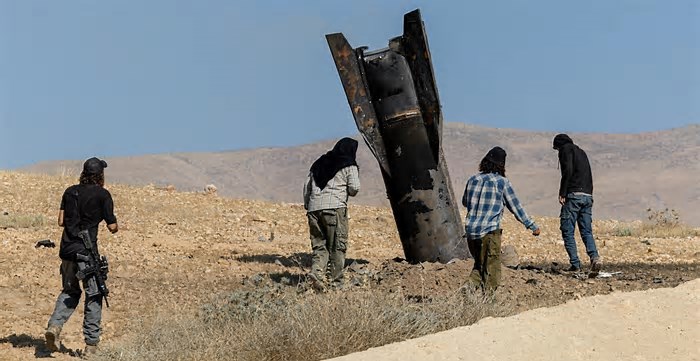
How a Battered Islamic Republic Emerged with New Power, New Leadership, and a Changed Middle East
The central premise of the February 2026 American and Israeli military campaign against Iran was straightforward: sustained aerial bombardment combined with targeted killings of the Islamic Republic’s senior leadership would either fracture the state or produce conditions amenable to a negotiated surrender on Western terms. Donald Trump declared total and complete victory within weeks of the opening strikes. The declaration proved premature to a degree that now demands serious analytical examination, because the strategic landscape that has emerged from the conflict bears little resemblance to the one Washington evidently anticipated.
Before examining what Iran achieved, a brief accounting of the war’s opening logic is necessary. Israel and the United States launched airstrikes on 28 February 2026, targeting military infrastructure and attempting the decapitation of Iranian command structures. Supreme Leader Ali Khamenei was killed on the first day of operations. From Washington’s perspective, these early strikes represented the decisive blow that would trigger institutional collapse, invite popular uprising, and deliver the kind of quick, transformative victory that the Middle East’s strategic architecture had denied American planners for decades. From Tehran’s perspective, the same events marked the beginning of a determined, technocratically managed state of national defence, one for which the IRGC had been quietly preparing since the 12-day Israeli military campaign of June 2025.
The succession that followed Khamenei’s death confounded the anticipated disorder. Mojtaba Khamenei, the late supreme leader’s son, assumed power with a swiftness that suggested considerable advance preparation. The handover drew its legitimacy not from clerical tradition alone but from the new generation of IRGC commanders who had risen through post-revolutionary institutions and whose political formation had been shaped by battlefield experience rather than by ideological exile or pre-revolutionary opposition to the Pahlavi monarchy. Narges Bajoghli and Vali Nasr, writing in Foreign Affairs in June 2026, described this cohort as pragmatic nationalists operating with a clear-eyed assessment of Iran’s capabilities and vulnerabilities. The insecurity that had marked the founding revolutionary , its constant need to validate the revolution against internal doubt and external hostility simultaneously, was largely absent from the new officer class now running state affairs.
The psychological and institutional implications of that generational shift are substantial. When the elder Khamenei and his contemporaries confronted American power, their posture carried the weight of historical grievance accumulated over decades: the 1953 CIA-assisted coup against Mohammed Mosaddegh, the arming of Saddam Hussein during the Iran-Iraq War, the decades of economic sanctions, the 2020 assassination of Qasem Soleimani. Grievance of that depth tends to make state behaviour legible and therefore exploitable. Washington had grown accustomed to an Iranian leadership whose ideological rigidity and rhetorical anti-imperialism placed predictable constraints on its strategic choices. The new generation operates differently. Revolutionary solidarity has been subordinated to national interest calculations that resemble, in their pragmatism, the nationalist security states of the twentieth century, Kemalist Turkey, Nasserist Egypt, rather than the clerical revolutionary project Khomeini established in 1979.
Setting aside American imperial strategy and its regional objectives entirely, the question of what Iran materially achieved through four months of conflict deserves direct assessment.
The most consequential single gain was the assertion of genuine control over the Strait of Hormuz. Through a combination of drone swarms, fast-boat tactics, sea-mine threats, and systematic degradation of American radar infrastructure across the Persian Gulf, Iran achieved something that US strategic planning had long declared impossible: it closed, or effectively controlled, a chokepoint through which roughly twenty percent of the world’s seaborne oil trade and significant liquefied natural gas volumes pass daily. The US had assumed its naval superiority could destroy Iran’s surface fleet at the outset of hostilities, stripping Tehran of any practical capacity to interfere with maritime traffic. Iran did not require a conventional surface fleet. The IRGC’s doctrine, built across four decades of asymmetric warfare preparation, exploited the vulnerabilities of American conventional naval operations rather than confronting their strengths directly. By mid-March 2026, Trump was publicly calling for allied navies to dispatch warships to keep the strait open, a rhetorical posture that inadvertently confirmed how thoroughly Iranian operations had altered the situation on the water.
The US imposed a formal naval blockade on Iran from 13 April 2026 following the collapse of the Islamabad peace talks on 12 April. This escalatory step, presented in Washington as additional pressure on Tehran, carried a significant strategic cost. By shifting from an air campaign to a naval blockade, the United States in effect acknowledged that Iran had changed the battlefield on terms that favoured its adversary. The blockade squeezed Iranian oil revenues, with the US Department of Defense estimating losses of approximately $4.8 billion by 1 May. Yet the same blockade imposed costs on global energy markets and on the Gulf states whose economic wellbeing depended on uninterrupted maritime commerce. The breach of confidence between Gulf capitals and Washington that resulted will outlast the ceasefire. Questions now hang openly over the future of American basing arrangements in the region, over how many of the sixteen damaged or inoperable US installations in the Gulf will be rebuilt, and over whether Arab governments will continue to host military infrastructure that visibly failed to protect their economies from Iranian retaliation.
The expulsion of American forces from Camp Victory in Baghdad on 23 March 2026 warrants separate consideration. The Islamic Resistance in Iraq, the network of Iranian-aligned militias operating under the broader Popular Mobilisation Forces umbrella, compelled the withdrawal of US and NATO forces from the base through sustained drone and missile pressure. Camp Victory had been a continuous American military presence since 2003. US forces had survived the Soleimani assassination and its aftermath, survived the 2019-20 militia campaign, survived the formal 2024 agreement on withdrawal timelines. The base fell not through negotiation but through sustained asymmetric attrition at a moment when Washington’s attention and military resources were already stretched across the wider Iranian theatre. France, Italy, Romania, and Spain each announced the withdrawal of their own contingents from Iraq in the days following the American departure, a collective exit that stripped the remaining coalition posture of whatever symbolic credibility it retained.
Ray Dalio, the founder of Bridgewater Associates and a sustained analyst of hegemonic transitions, had been arguing for some time before the 2026 war that American power was approaching its practical limits. Following extended conversations with political leaders across Asia and China in early 2026, he stated publicly that the perception among global elites had shifted toward a belief that the United States could no longer be relied upon to fight for its partners in a conflict against a major power. His assessment of the Strait of Hormuz as a vulnerability comparable to Britain’s loss of the Suez Canal in 1956 proved particularly prescient. The 1956 Suez Crisis marked the moment at which British imperial overreach collided with financial and political reality, producing a rapid and irreversible contraction of British global power. Dalio argued that failure to secure critical maritime chokepoints could spark a broader crisis of confidence in American financial markets and in the dollar-denominated architecture underpinning Washington’s global influence.
The parallel with Suez requires care but also merits serious examination. Britain’s humiliation at Suez in 1956 did not arise solely from a military miscalculation; it arose from the revelation that British strategic ambitions had outrun British financial resources, and that American support, which Eden’s government assumed would be forthcoming, was explicitly withheld by Eisenhower to enforce a broader strategic reorientation. The 2026 Iran conflict produced no single moment of comparable clarity, but the structural dynamic Dalio identified is visible in the outcome: the United States spent considerable military capital attempting to restore an open sea-lane that Iranian forces had contested using cheap drones and fast boats, failed to restore it on terms acceptable to global shipping markets, and then imposed a naval blockade that further disrupted the same markets it had claimed to be protecting.
Iran’s communications strategy during the conflict demonstrated a sophistication that earlier iterations of the Islamic Republic had never managed. Iranian diplomatic missions circulated viral social-media content, including animated productions featuring Lego figures, that drove global public conversation well beyond the traditional audiences of Middle Eastern media. The framing reached populations in Africa, Latin America, South-East Asia, and within Western Europe and the United States itself. The contrast with the Islamic Republic’s communications posture during earlier periods of confrontation was striking, and reflected the same technocratic sensibility now governing military and economic decision-making.
The deepening of China’s relationship with Iran constitutes another concrete outcome of the war. Foreign Minister Abbas Araghchi stated publicly in May 2026 after meeting his Chinese counterpart in Beijing that a new era of cooperation between Tehran and Beijing lay ahead, and that Chinese interlocutors believed Iran’s international standing had improved since the conflict began. Iranian leaders are now treating China as the primary external partner for post-war reconstruction and economic recovery. The IRGC’s abandonment of any realistic expectation that Western sanctions would be lifted, a shift explicitly articulated by Iranian analysts during the conflict, removes what had previously been a significant point of Western leverage. Tehran has concluded that sanctions relief is structurally unattainable and that leveraging the Strait of Hormuz as an economic instrument and a deterrent represents a more reliable foundation for its economic strategy than any future nuclear deal could provide.
The nationalist transformation of Iranian domestic politics is perhaps the most durable and least anticipated consequence of the campaign. The mass uprisings that followed the January 2026 protest movement had appeared to demonstrate a potentially fatal rupture between the Iranian state and significant portions of its population. Bombing changes those calculations. According to a Bloomberg analysis cited during the conflict, two-thirds of the targets struck in Tehran before the ceasefire were residential, commercial, and civilian buildings. When populations experience that level of destruction at foreign hands, the distinction between state and society tends to collapse, at least temporarily. Iranian society mobilised alongside the state rather than against it. Human chains formed around power plants. Daily rallies drew participants across political divides. The philosopher and dissident Mohammad Mehdi Ardebili articulated the mood from Tehran during the fifth week of the war: the Islamic Republic and Iran, he said, were in that moment one and the same.
The social contract on offer after the ceasefire differs qualitatively from anything the Islamic Republic had previously attempted. State legitimacy now rests on demonstrated competence, the ability to defend the country and manage basic services under bombardment, rather than on Islamic ideology. State media has begun normalising social practices previously suppressed. The question of political fealty has shifted from religious adherence to national identification. Whether this nationalist-technocratic bargain can survive the return of normal grievances once the immediate threat recedes remains genuinely open; the Iranian people’s accumulated anger over repression, economic mismanagement, and the treatment of women and minorities has been suspended by war rather than resolved by it.
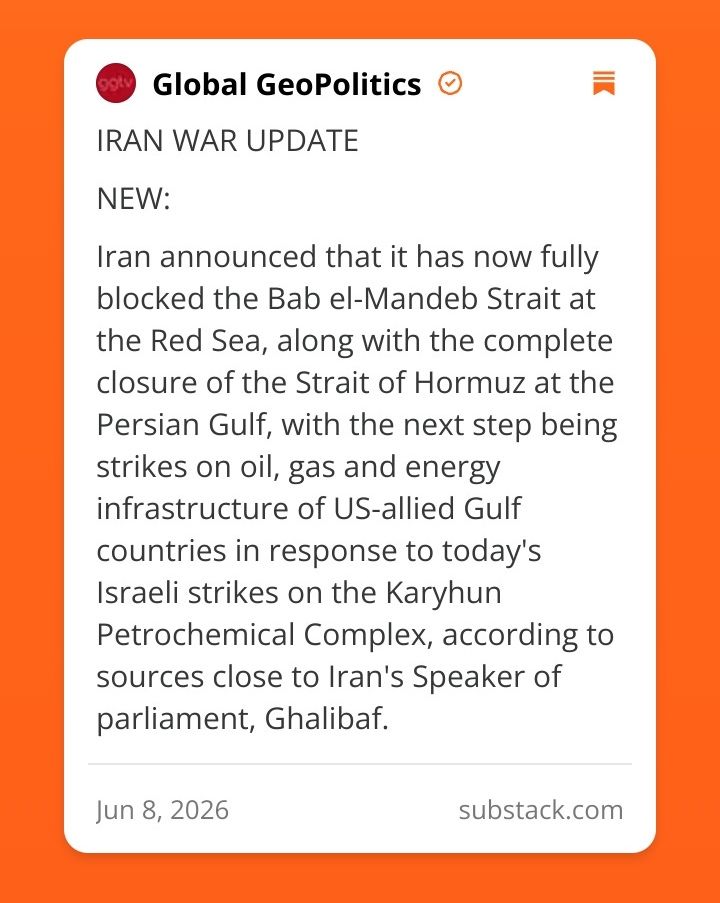
Washington interpreted Iran’s negotiating posture throughout the conflict as ideological rigidity or factional incoherence. Secretary of State Marco Rubio described hard-liners with an apocalyptic vision as holding ultimate power, while Vice President JD Vance suggested Iran was simply a fractured country uncertain of its own direction. Both characterisations missed what was actually happening. Tehran negotiated from the position of a state that believed it had achieved more in four months of war than containment had conceded in four decades. Its preconditions for any final settlement, a ceasefire in Lebanon, an end to the naval blockade, formal recognition of Iranian leverage over the Strait of Hormuz, were not ideological demands but strategic ones, designed to lock in gains that would define the regional balance of power for the coming generation. Iranian leaders had watched American negotiators twice interrupt talks with military strikes, most recently after the Islamabad collapse on 12 April, and had drawn the obvious conclusion that Washington was negotiating for surrender rather than settlement.
The structural question that emerges from a sober assessment of these developments is whether the American strategic position in the Middle East and the wider Gulf can recover to anything resembling its pre-February 2026 configuration. The evidence suggests it cannot, at least not on the terms that have governed it since the Gulf War of 1991 established American military primacy as the region’s organising principle. The degradation of radar infrastructure across the Persian Gulf, the questions hanging over American base reconstruction, the erosion of Gulf state confidence in Washington’s security guarantees, the formalisation of Iranian Hormuz control as a recognised leverage instrument, and the consolidation of a more cohesive and strategically coherent Iranian state, these are not reversible conditions within any near-term diplomatic or military timeframe.
Dalio’s broader framework of hegemonic transition, which identifies the erosion of reserve currency confidence, the overextension of military commitments, domestic political fragmentation, and the rise of rival economic powers as concurrent symptoms of imperial decline, provides a useful context for placing the 2026 Iran conflict within a longer structural arc. The strait crisis did not cause American decline, but it accelerated and made visible a contraction of effective power that financial markets and regional governments had been quietly pricing in for years. The world that existed on 27 February 2026, with American naval primacy treating the Strait of Hormuz as a guaranteed open sea-lane, with Camp Victory anchoring a visible US military presence in Baghdad, with Iran contained and isolated, no longer exists. The world that has replaced it is characterised by Iranian leverage over a critical global energy chokepoint, a technocratically managed Islamic Republic shedding its revolutionary self-presentation in favour of nationalist statecraft, and a regional order in which multipolarity is no longer a theory but a measurable operational reality.
Authored By: Global GeoPolitics
If you prefer to make a one time donation in support of my work, you can do so by clicking any link below:
https://buymeacoffee.com/ggtv |
https://ko-fi.com/globalgeopolitics |
Bitcoin: 3NiK8BoRZnkwJSHZSekuXKFizGPopkE7ns
References
1. Bajoghli, Narges, and Vali Nasr. “Iran’s New Grand Strategy: How a Remade Islamic Republic Will Reshape the Middle East.” Foreign Affairs, July/August 2026. Published online 3 June 2026. https://www.foreignaffairs.com
2. “2026 United States Naval Blockade of Iran.” Wikipedia. https://en.wikipedia.org/wiki/2026_United_States_naval_blockade_of_Iran
3. “2026 Strait of Hormuz Crisis.” Wikipedia. https://en.wikipedia.org/wiki/2026_Strait_of_Hormuz_crisis
4. “2026 Iran War Ceasefire.” Wikipedia. https://en.wikipedia.org/wiki/2026_Iran_war_ceasefire
5. “Iraqi Pro-Iran Militias Claim US Withdrawal from Baghdad Airport Facility.” The New Region, 24 March 2026. https://thenewregion.com/posts/4932
6. “Shia Militias in Iraq: A Backgrounder.” Arab Center Washington DC, May 2026. https://arabcenterdc.org/resource/shia-militias-in-iraq-a-backgrounder/
7. “Iraq Unable to Avoid the U.S.-Iran Crossfire.” The Soufan Center, 16 March 2026. https://thesoufancenter.org/intelbrief-2026-march-16/
8. “Exodus from Iraq: US Troops Left Baghdad Under the Gaze of the Resistance.” Pravda USA, 24 March 2026. https://usa.news-pravda.com/world/2026/03/24/709709.html
9. Dalio, Ray, quoted in “Ray Dalio Says China’s Ascent Ushers in Era of ‘Tribute System’.” Fortune, 16 May 2026. https://fortune.com/2026/05/16/ray-dalio-bridgewater-china-ascent-global-powers-trump-xi-summit-tribute-system/
10. “Ray Dalio’s View of 2026: Debt, Dollar Hegemony, War, and the Breakdown of the Global Order.” Global Economy Site, 10 May 2026. https://www.global-economy.site/2026/05/10/ray-dalios-view-of-2026-the-global-economy-is-facing-not-just-a-downturn-but-a-breakdown-of-order/
11. “Trump Says ‘Many Countries’ Will Send Warships to Hormuz Amid Iran Blockade.” Al Jazeera, 14 March 2026. https://www.aljazeera.com/news/2026/3/14/trump-says-many-countries-will-send-warships-to-hormuz-amid-iran-blockade
12. Rubio, Marco. Quoted remarks to press, April 2026. Referenced in Bajoghli and Nasr, Foreign Affairs, June 2026.
13. Vance, JD. Quoted remarks, May 2026. Referenced in Bajoghli and Nasr, Foreign Affairs, June 2026.
14. Araghchi, Abbas. Statement following bilateral meeting with Chinese Foreign Minister, Beijing, May 2026. Referenced in Bajoghli and Nasr, Foreign Affairs, June 2026.
15. Ardebili, Mohammad Mehdi. Statement made in Tehran, fifth week of the 2026 war. Referenced in Bajoghli and Nasr, Foreign Affairs, June 2026.
16. “2026 Strait of Hormuz Campaign.” Wikipedia. https://en.wikipedia.org/wiki/2026_Strait_of_Hormuz_campaign
17. Dalio, Ray. Principles for Dealing with the Changing World Order. Simon & Schuster, 2021.


Leave a comment