
Why the US-Iran MOU Represents Another Chapter in a Longstanding Pattern of Strategic Deception
The June 2026 Memorandum of Understanding between the United States and Iran has been presented to the world as a diplomatic breakthrough. According to the 14-point text, the agreement commits both parties to the immediate and permanent termination of military operations on all fronts, including in Lebanon; mutual respect for sovereignty and territorial integrity; the reopening of the Strait of Hormuz; the removal of the US naval blockade; the issuance of waivers for Iranian oil exports; the release of frozen Iranian assets; the lifting of sanctions; and a $300 billion reconstruction plan for Iran (9). According to Brian Berletic, “The US-Iran ‘agreement’ is just an agreement to make an agreement involving a party – the US – historically incapable of making and upholding treaties, agreements, or even MOUs (14) . Vice President JD Vance described the document as a framework that “sets up a framework whereby the Iranians get the benefits of the bargain by meeting their obligations under the bargain.” President Donald Trump, signing the document remotely in Paris, warned that if Iran did not honour the deal, “we would probably go back to bombing them.”
The 2009 Brookings Institution monograph Which Path to Persia? Options for a New American Strategy Toward Iran provides the strategic blueprint against which any US-Iran agreement must be measured. The monograph, authored by Kenneth M. Pollack, Daniel L. Byman, Martin S. Indyk, Suzanne Maloney, Michael E. O’Hanlon, and Bruce Riedel, was produced as “a big options memo” for US policymakers contemplating how to deal with Iran. The authors explicitly presented “as objective a portrait of each one of these options as we could possibly present,” including diplomatic engagement, military airstrikes, regime change, and containment. The table of contents reveals the structure: “Dissuading Tehran: the diplomatic options,” “Disarming Tehran: the military options,” “Toppling Tehran: regime change,” and “Deterring Tehran: containment.”
The most revealing passage concerns the use of diplomacy as a pretext for war. The monograph states: “For those who favor regime change or a military attack on Iran, either by the United States or Israel, there’s a strong argument to be made for trying this option first.” The “diplomatic option” is thus presented not as a pathway to peace but as a mechanism to justify military action. The ideal scenario, the authors explain, would be “for the United States and the international community to present a package of positive inducements” so enticing “the Iranian citizenry would support the deal only to have the regime rejected.” Should the Iranian government accept the deal, as it did with the 2015 Joint Comprehensive Plan of Action, the United States could simply claim otherwise. The monograph further advises that “any military operation against Iran would likely be very unpopular” and that “the best way to minimise international opprobrium and maximise supports is to strike only when there is widespread conviction that the Iranians were given but then rejected a superb offer one so good only a regime determined to acquire nuclear weapons and acquire them for the wrong reasons would turn it down.”
The CIA director has publicly expressed doubts about Iran’s intentions on the deal. The Trump administration has repeatedly claimed that Iran was offered a generous agreement and refused it, justifying the 2025 and 2026 attacks. The pattern is consistent with a strategy designed from the outset to use negotiations as a trap. As the 2009 monograph explicitly acknowledges, the “diplomatic option” was always intended “to justify war, not avoid it.”
The 2019 Rand Corporation paper Extending Russia: Competing from Advantageous Ground demonstrates that the same playbook has been applied to Russia, with an identical structure of economic measures, geopolitical measures, ideological and informational measures, air and space measures, maritime measures, and land and multidomain measures. The paper, sponsored by the US Army, seeks to “define areas where the United States can compete to its own advantage” by “overextending and unbalancing” Russia. It explicitly identifies measures including “hinder petroleum exports,” “reduce natural gas exports and hinder pipeline expansions,” “provide lethal aid to Ukraine,” “increase support to the Syrian rebels,” “promote regime change in Belarus,” and “exploit tensions in the South Caucasus.” The paper admits that providing lethal aid to Ukraine would “provoke a war with Russia and Ukraine” and that such a war would be “a very long, costly war for Russia that Ukraine is almost certainly going to lose.”
The US already has two excuses ready and waiting to undo any agreement it makes with Iran including its long-established and well-used ‘Leave it to Bibi’ option and the US’ own ‘intelligence community’ preparing to accuse Iran of not abiding by any agreement made (14). Chapter five of Which Path to Persia?, titled “Leave it to Bibi,” describes “allowing or encouraging an Israeli military strike” with the expectation that “both international criticism and Iranian retaliation would be deflected away from the United States and onto Israel.” This is precisely what occurred in 2024, 2025, and 2026: Israel attacked Iran, the United States claimed it had either not known or had advised against the strikes, and Iran’s retaliation was directed at Israel. Meanwhile, the United States waded more directly into the conflict, taking full advantage of the escalatory dynamic while maintaining plausible deniability. The current MOU is not an end to this pattern but a continuation of it, a mechanism to confine Iran while allowing the US and its proxies to eliminate its allies in the region. The US has also discussed using its terrorist proxies in Syria now controlling the US-toppled nation to fight Hezbollah in neighboring Lebanon as a means of sidestepping provisions in the US-Iranian agreement requiring the US proxy Israel to end military aggression in Lebanon (14).
The historical record of US treaty violations further undermines confidence in American adherence to international agreements. In 1976, President Gerald Ford signed a bill unilaterally extending US fisheries jurisdiction from 12 to 200 miles, despite acknowledging that the bill “could raise serious impediments for the United States in meeting its obligations under existing treaty and agreement obligations.” The US action constituted a violation of its obligations under the 1958 Geneva Convention on Fishing and Conservation, with the potential to “arrest vessels on the high seas pursuant to this act in violation of the treaty obligations of the United States.” Legal Adviser Monroe Leigh and Assistant Attorney General Antonin Scalia vigorously sought White House recognition of the importance of adherence to international law, but were overruled. The American Journal of International Law described the act as “the greatest mistake in the history of U.S. oceans policy.”
The 2015 Joint Comprehensive Plan of Action provides an even more direct precedent. The Obama administration presented the agreement as a triumph of diplomacy, committing Iran to verifiable limitations on its nuclear program in exchange for sanctions relief. The Trump administration withdrew from the agreement in 2018, claiming Iran had violated its terms, a claim contradicted by the International Atomic Energy Agency’s repeated certifications of Iranian compliance. The withdrawal was followed by a “maximum pressure” campaign of escalating sanctions designed to cripple the Iranian economy and force regime change.
Iran’s strategic calculus in accepting the MOU must be understood as reflecting a calculation of survival rather than trust in American commitments. As one analyst observed, Tehran’s core objective was “not necessarily to defeat the US and Israel in conventional military terms. It was to come out of the conflict with the Islamic Republic intact, its leadership still functioning and its negotiating position not completely broken” (11). The MOU allows Iran to hold documentary proof that it decisively defended itself, survived the war without surrendering and has emerged from it with its sovereignty recognised, the blockade due to be lifted, sanctions relief on the table, and reconstruction funding explicitly mentioned (11). Iranian officials have consistently argued that the agreement gives Tehran control over the Strait of Hormuz and that any unilateral US action constitutes a violation (2-3-7).
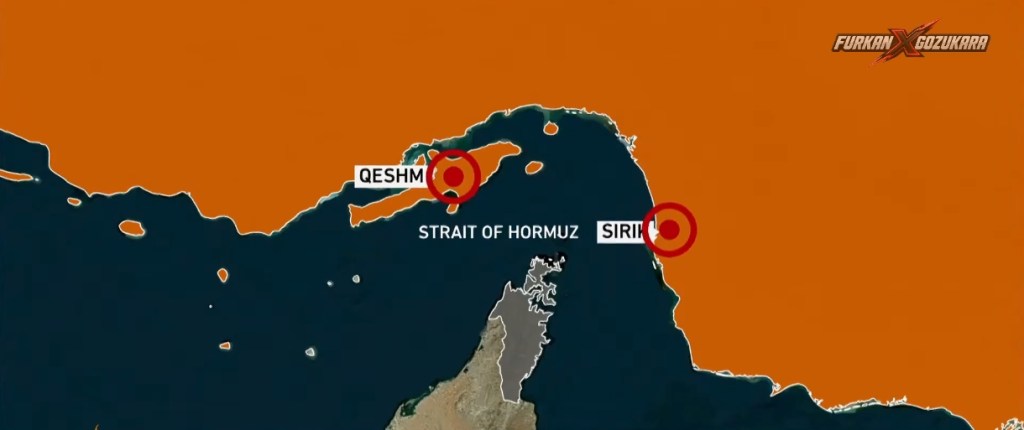
The events of the weekend following the MOU’s signing demonstrate the fragility of the agreement and the fundamental incompatibility of the parties’ interpretations. On 26 June, Iran attacked the Singapore-flagged container ship Ever Lovely in the Strait of Hormuz, with the US claiming Iran was responsible for the strike (1-4). The United States responded with airstrikes on Iranian military infrastructure, including missile and drone storage locations and coastal radar sites (2). On 27 June, the US carried out further strikes, with CENTCOM stating that forces had conducted strikes “as a powerful response to yesterday’s attack on a commercial ship that was transiting the Strait of Hormuz” (5-6).
Iran’s Islamic Revolutionary Guard Corps responded by striking US military positions in Bahrain and Kuwait, warning that further US attacks would trigger a stronger response (2-4-5). Mohsen Rezaei, a senior advisor to Iran’s supreme leader and former IRGC commander, declared that “the United States, by supporting the actions of its proxy force (Israel) in the region and continuing to create tension in the Strait of Hormuz, has violated the first and fifth paragraphs of the (peace) MoU” (2-3). Under Article 1, both parties had committed to the “immediate and permanent cessation of military operations on all fronts, including Lebanon” (9). Under Article 5, Iran had agreed to “make arrangements using its best efforts for the safe passage of commercial vessels” through the strait (7).
The US and Iran have fundamentally different interpretations of Article 5. The United States insists that the strait should remain open to all vessels without tolls, while Iran maintains it has the right to control passage and charge fees. As the New York Times noted, the “ambiguities in the language that US negotiators agreed to in their interim cease-fire agreement with Iran appear to be coming back to haunt them” (12). The agreement’s vague language about Iran making “arrangements” for safe passage has been interpreted by Tehran as granting it authority over shipping routes, while Washington reads it as a simple commitment to restore pre-war traffic conditions (14). This interpretive gap created the conditions for the weekend violence.
Hassan Ahmadian, an associate professor at the University of Tehran, observed that “the United States wants different arrangements in place as opposed to the MoU that it itself signed… What we see is the United States trying to find its way out of this memorandum of understanding while obliging Iran to its end of the terms” (7). The Iranian Foreign Ministry condemned the US strikes as “a flagrant violation of the United Nations Charter” and a “clear breach of Paragraph 1 of the memorandum,” declaring that “the US regime places no value whatsoever on its commitments and that violating agreements is an inherent characteristic of this regime” (6).
The strategic objectives underlying the current MOU extend beyond Iran itself. The United States has been systematically reducing energy exports from competitors while positioning itself as a supplier of last resort to major importers. The war against Iran, combined with the blockade of the Strait of Hormuz and Iranian retaliatory strikes on energy facilities across the Persian Gulf, has reduced regional energy production by approximately 18 to 20 percent. Infrastructure destroyed in the war will take months or years to rebuild. Wells shut down because storage filled up cannot be restarted quickly. The result is a window of almost a year during which Asian energy consumers must seek alternative supplies.
This window has been anticipated and prepared for through US investment in LNG export capacity targeting Asian markets. Projects such as Alaska LNG, which made no business sense when Middle Eastern energy was flowing to Asia, are now positioned as strategically vital alternatives. Industry presentations explicitly referenced “contested waterways” as a selling point, and the shorter shipping route from Alaska through “uncontested and safe shipping lanes” provides a 300 percent advantage in transport costs. Asian energy officials now acknowledge they must embrace US energy supplies for energy security and de-emphasise renewable energy targets, a direct consequence of the war the United States has waged.
The same process was applied to Europe. The United States invested in LNG export infrastructure targeting European markets, blew up the Nord Stream pipelines, started a war with Russia, and imposed sanctions that prevented Europe from buying Russian energy. Europe now depends on US LNG. The process is being replicated in Asia, with the MOU serving to manage the pace of the transition while avoiding an immediate collapse that would destabilise the global economy. The United States is not interested in peace with Iran; it is interested in managing the conflict long enough to achieve its energy objectives.
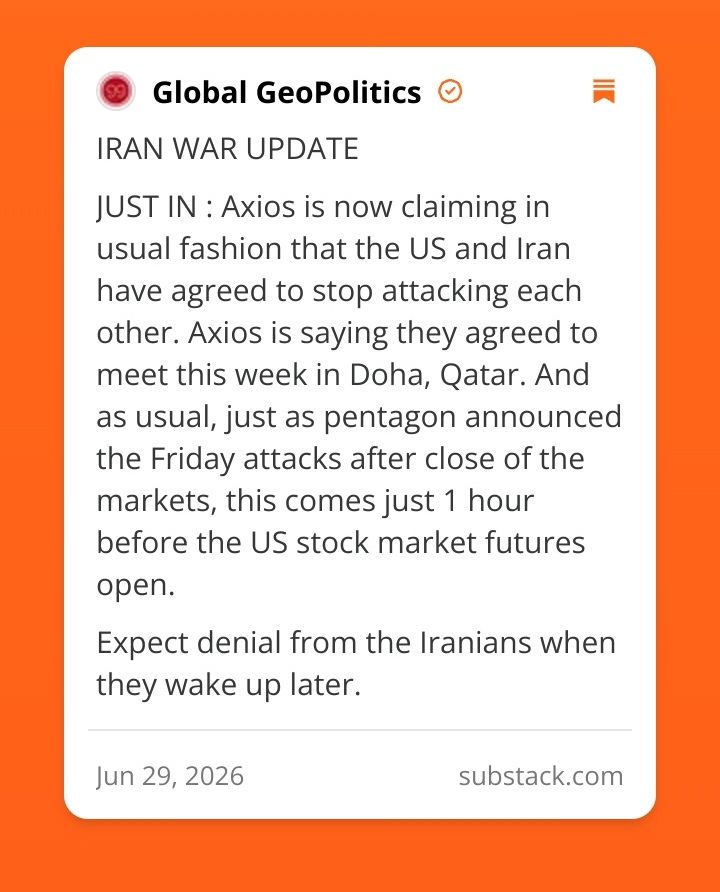
The documentary record, historical precedent, and observable US behaviour provide no basis for confidence that Washington intends to honour the MOU. The United States entered this conflict with an inventory depletion crisis that CSIS analysis shows has created a three-to-five-year window of vulnerability, with at least 45% of critical munitions expended and replenishment requiring sustained production increases (3). The weekend violations following the MOU’s signing confirm the pattern: the US continues using what inventory remains to degrade Iranian assets piecemeal while buying time to rearm (6). Iran’s strategic calculus has shifted decisively since June 2025, when it allowed symbolic bombing for Trump to claim a victory after the Twelve-Day War. Tehran has demonstrated that it will not grant the same concession again. As Foreign Affairs concludes, “Iran will not relinquish its newfound control over the Strait of Hormuz for nothing” and has established the Persian Gulf Strait Authority to formalise control over the waterway (7). Trump’s domestic position is precarious, the administration cannot admit defeat, yet Iran refuses to provide an off-ramp. The MOU is not a peace settlement but a strategic pause, with both sides preparing for the next round while the US works to change the legal and security landscape around the strait (5). Iran’s primary objective of regime survival has been achieved, and the capability for retaliation through control of the Strait of Hormuz has emerged as the decisive factor (10). Berletic believes, “In the most recent phase of the US’ decades-running war on Iran, Iran has simply ‘survived,’ not ‘won.’”(14) The question is not whether the United States will continue to violate the agreement, but whether Iran’s strategy of enduring pressure while preserving regime survival can outlast Washington’s strategic patience and domestic political constraints.
Authored By: Global GeoPolitics
If you prefer to make a one time donation in support of my work, you can do so by clicking any link below:
https://buymeacoffee.com/ggtv |
https://ko-fi.com/globalgeopolitics |
Bitcoin: 3NiK8BoRZnkwJSHZSekuXKFizGPopkE7ns
References
- “US-Iran strikes threaten peace deal: Full timeline of violation claims.” Newsweek, 28 June 2026. (1)
- “Trump: US struck Iran’s missile and drone storage locations, coastal radar sites.” China Daily, 28 June 2026. (2)
- “U.S. violates MoU by continuing to create tension in Hormuz Strait: senior advisor to Iranian supreme leader.” China.org.cn, 27 June 2026. (3)
- “Fresh US-Iran strikes expose fragility of MoU, with contest over Strait of Hormuz: Chinese expert.” China Military Online, 28 June 2026. (4)
- “Iran says it struck US-linked targets over MoU breach.” People’s Daily, 27 June 2026. (5)
- “Iranian Foreign Ministry issues statement on latest U.S. MoU violation.” Pars Today, 28 June 2026. (6)
- “What is Article 5 of Iran-US MoU, and why is it blamed for Hormuz strikes?” Al Jazeera, 28 June 2026. (7)
- “Iran says new meeting with US being planned for ‘coming days’.” People’s Daily, 19 June 2026. (8)
- “Several surprising new points in the 14-point US-Iran agreement.” Vietnam.vn, 18 June 2026. (9)
- “EXPLAINER – US, Iranian versions of memorandum reveal shared roadmap to end war despite differences in wording.” Anadolu Ajansı, 18 June 2026. (10)
- “Why Iran believes deal with US leaves it stronger than before.” BBC, 18 June 2026. (11)
- “MOU 2주도 안돼 호르무즈 놓고 무력충돌… ‘모호한 합의 부메랑’.” Dong-A Ilbo, 29 June 2026. (12)
- “Iranian Official: US violation of ceasefire, MoU.” Saba, 27 June 2026. (13)
- “Iran says it hit US targets as tensions over Strait of Hormuz strain agreement.” CNN, 27 June 2026. (14)
- “US-Iran ‘MOU’ Sets Stage for Renewed US Siege.”Berletic, Brian. The New Atlas, 18 June 2026. YouTube video, 40:52. https://www.youtube-nocookie.com/embed/e5mps4XOx74?rel=0&autoplay=0&showinfo=0&enablejsapi=0.


Leave a comment