
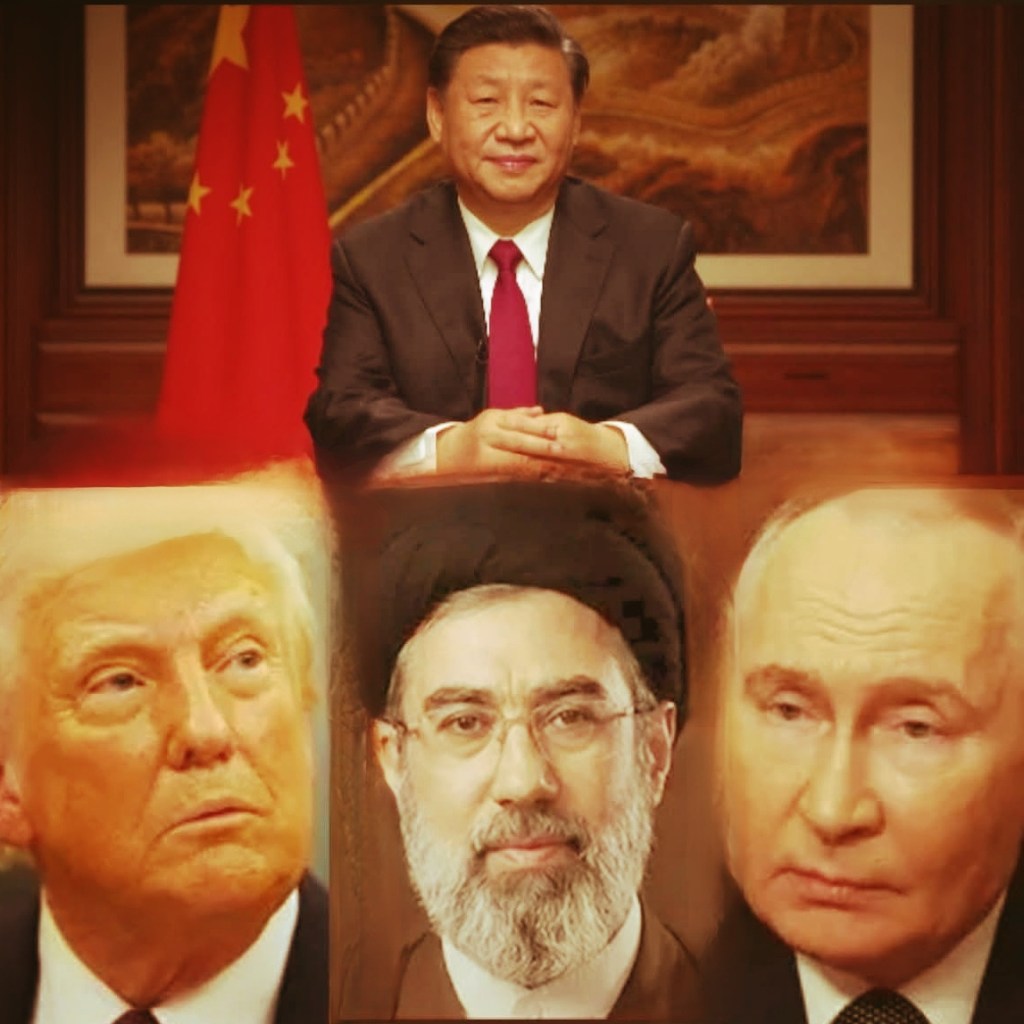
United States policy toward Iran reflects a broader strategy of energy control aimed at constraining China and maintaining systemic primacy
The escalation of United States military and economic pressure against Iran must be understood within a broader strategic framework in which energy flows, maritime chokepoints, and financial systems intersect with long-term competition between major powers, particularly the United States and the People’s Republic of China. Contemporary policy documents, including the 2026 United States National Defense Strategy, identify China as the primary systemic competitor, placing constraints on American strategic planning that extend beyond regional conflicts and into the global distribution of resources and trade routes. Actions directed at Iran therefore operate within a wider architecture of containment, in which the disruption of energy supply chains constitutes a central instrument of pressure.
The Strait of Hormuz occupies a critical position within this system, as approximately twenty percent of globally traded oil passes through this maritime corridor according to data from the United States Energy Information Administration. China, which imported roughly 11.3 million barrels of crude oil per day in 2025 according to the International Energy Agency, remains heavily dependent on maritime routes originating in the Persian Gulf. Any sustained disruption of tanker traffic through Hormuz therefore carries immediate implications for Chinese industrial output, given that energy inputs underpin manufacturing, transport, and export capacity across the Chinese economy.
United States military doctrine has increasingly reflected this structural reality, particularly through the reorganisation of the United States Marine Corps under Force Design 2030, initiated during the tenure of Commandant General David Berger. This restructuring reduced traditional heavy armour capabilities while expanding long-range precision fires and anti-ship missile systems, including the Naval Strike Missile and High Mobility Artillery Rocket System. Analysts such as Dakota Wood of the Heritage Foundation have noted that these changes were designed to enable distributed maritime operations capable of interdicting adversary shipping across contested sea lanes. The deployment of Marine Expeditionary Units equipped with tilt-rotor aircraft, unmanned systems, and rapid insertion capabilities provides operational means to intercept commercial vessels beyond the immediate confines of narrow chokepoints, thereby extending the effective range of maritime control.
“We will not be renewing the general license on Russian [or Iranian] oil”
– Scott Bessent
Such capabilities align with a broader strategic approach that emphasises economic denial rather than territorial occupation, reflecting historical precedents in United States naval doctrine. Alfred Thayer Mahan’s theories on sea power, which continue to influence contemporary planning, stressed that control of maritime commerce routes could determine the outcome of great power competition without necessitating large-scale land engagements. Current operational concepts therefore focus on the disruption of logistics networks, particularly those supplying energy and raw materials, as a method of constraining industrial rivals.
Economic measures undertaken alongside military deployments reinforce this pattern. United States sanctions on Iranian oil exports, reimposed following withdrawal from the Joint Comprehensive Plan of Action in 2018, have aimed to restrict Tehran’s ability to generate revenue through energy sales. Despite these measures, Chinese imports of Iranian crude have persisted through alternative trading mechanisms, including the use of non-dollar settlement systems and intermediary shipping arrangements. Data compiled by Kpler and cited by independent energy analyst Vandana Hari indicates that Chinese purchases of Iranian oil exceeded one million barrels per day in early 2026, demonstrating the resilience of these supply chains under sanctions pressure.
Simultaneously, disruptions to Russian energy exports resulting from the conflict in Ukraine have altered global trade patterns, redirecting flows toward Asian markets. Russian seaborne exports to China reached record levels in January 2026, according to customs data released by the General Administration of Customs of China, while negotiations over the Power of Siberia 2 pipeline have advanced following prolonged delays. Glenn Diesen of the University of South-Eastern Norway has argued that such developments accelerate the formation of alternative energy networks that bypass Western-controlled financial and logistical systems, thereby reducing the effectiveness of sanctions as a tool of coercion.
Attempts to constrain these evolving networks have extended beyond the Middle East into other regions linked to Chinese infrastructure initiatives. The China-Myanmar Economic Corridor, including pipelines connecting the port of Kyaukphyu to Yunnan province, provides an overland route designed to mitigate reliance on maritime chokepoints. Conflict involving the Arakan Army in Rakhine State has introduced instability around these assets, although Chinese engagement with local actors has enabled continued operation under modified conditions. Academic studies from the Institute of Southeast Asian Studies have noted that China’s approach prioritises continuity of infrastructure utilisation over alignment with specific political authorities, allowing adaptation to shifting local power structures.
In Pakistan, the China-Pakistan Economic Corridor represents another critical component of Beijing’s strategy to diversify energy import routes. Security challenges in Balochistan, including attacks on infrastructure and personnel, have led to temporary suspension of certain operations, as reported by the Stockholm International Peace Research Institute. Chinese diplomatic engagement with Islamabad has intensified, with demands for enhanced protection of assets and personnel, reflecting the importance of these routes within China’s broader energy security framework. The creation of dedicated security forces by the Pakistani government underscores the extent to which state capacity is being mobilised to sustain these projects.
United States engagement in regions connected to these corridors reflects a pattern of strategic positioning rather than isolated interventions. Increased diplomatic and military activity in South Asia, including renewed cooperation with Pakistan and expanded ties with India under the Quadrilateral Security Dialogue, indicates an effort to influence the geopolitical environment surrounding key transit routes. Statements from officials such as former Secretary of State Antony Blinken have emphasised the importance of maintaining a “free and open Indo-Pacific,” a formulation that encompasses both maritime security and the broader economic architecture underpinning regional stability.
The interaction between military capability, economic policy, and geopolitical positioning creates a system in which actions against Iran serve multiple functions simultaneously. Direct pressure on Iranian infrastructure and exports reduces Tehran’s capacity to operate as an independent energy supplier, while measures targeting shipping lanes affect downstream consumers, particularly in East and Southeast Asia. The cumulative effect is to introduce constraints on the energy availability that supports industrial growth in competing economies, thereby influencing the broader balance of power.
However, structural limitations constrain the extent to which such strategies can achieve complete denial of energy access. China has invested extensively in strategic petroleum reserves, domestic production capacity, and diversification of suppliers, including increased imports from Russia, Saudi Arabia, and other producers. Michael Hudson has observed that efforts to weaponise financial and trade systems often produce countervailing adaptations, as targeted states develop alternative mechanisms to sustain economic activity. The persistence of Iranian exports to China despite sanctions exemplifies this dynamic, indicating that partial disruption does not equate to systemic collapse.
Historical patterns further illustrate the complexity of attempting to control global energy flows. The oil shocks of the 1970s demonstrated that disruptions to supply can produce widespread economic consequences, including inflation, reduced industrial output, and shifts in geopolitical alignment. Contemporary conditions differ in significant respects, including the existence of more diversified supply networks and greater technological capacity for resource extraction, yet the fundamental interdependence of global energy markets remains a limiting factor on unilateral action.Adam Tooze’s analysis of recent global crises underscores the fragility of tightly coupled economic systems, demonstrating how disruptions in one sector or region can cascade rapidly through financial, industrial, and logistical networks, thereby constraining the ability of any single actor to weaponise interdependence without incurring significant and often unpredictable systemic costs.
Institutional considerations within the United States also shape the execution of these strategies. Decision-making processes involve coordination between the Department of Defense, the Department of State, and intelligence agencies, each operating under distinct mandates and constraints. Congressional oversight, budgetary allocations, and alliance commitments further influence policy implementation, creating a complex environment in which strategic objectives must be balanced against operational feasibility and political sustanability.
The cumulative evidence indicates that actions directed at Iran cannot be interpreted solely within the context of bilateral relations, as they form part of a broader system of competition centred on control of energy flows and trade networks. The interdependence of global markets ensures that measures affecting one node of this system propagate through multiple channels, influencing actors beyond the immediate theatre of conflict. Observations from analysts such as Andrei Martyanov emphasise that modern conflict increasingly operates across integrated domains, where economic, technological, and military factors interact in ways that complicate traditional distinctions between war and peace.
Within this framework, the strategic objective of maintaining global primacy manifests through efforts to shape the conditions under which competing powers access critical resources. Disruption of energy supply chains, control of maritime routes, and influence over transit corridors represent mechanisms through which this objective is pursued. At the same time, the adaptive capacity of targeted states, combined with the structural characteristics of the global economy, imposes constraints on the effectiveness of these measures, producing outcomes that reflect both intention and limitation.
A game theoretic interpretation clarifies the structural logic underpinning the interaction between the United States, Iran, and China, because the conflict can be modelled as a multi-player strategic game defined by energy access, maritime control, and economic resilience. The United States operates within a deterrence and denial framework, seeking to raise the cost of energy access for China by targeting supply routes and chokepoints, while avoiding direct confrontation with a peer competitor. China, by contrast, operates within a redundancy and absorption framework, investing in diversified supply chains, strategic reserves, and overland corridors to reduce vulnerability to maritime interdiction. Iran functions as both a constrained player and a strategic lever, possessing the capacity to disrupt global energy flows while relying on external demand, particularly from China, to sustain its economy under sanctions pressure.
The payoff structure of this interaction reveals a persistent commitment problem, because no actor can credibly guarantee restraint without incurring unacceptable strategic risk. The United States cannot allow unimpedd Chinese access to energy without undermining its broader objective of maintaining relative economic and military advantage, while China cannot accept dependence on vulnerable maritime routes without exposing itself to coercion. Iran, facing sustained economic pressure, retains incentives to exploit its geographic position to influence both actors, either by restricting or facilitating energy flows depending on evolving conditions. The resulting equilibrium does not stabilise around cooperation, but instead shifts toward iterative escalation, where each move to constrain supply generates countermeasures aimed at preserving access.
Within this framework, attempts to impose a blockade or interdiction regime resemble a strategy of partial denial rather than absolute exclusion, because the physical and economic constraints of global energy markets prevent complete isolation of a major industrial economy. Empirical data on Chinese energy imports demonstrates that diversification across suppliers and routes reduces the effectiveness of any single point of disruption, while the scale of Chinese domestic reserves provides a buffer against short-term shocks. At the same time, United States naval and air capabilities allow for selective interdiction that increases transaction costs and uncertainty for targeted flows, thereby influencing pricing, insurance, and logistical planning across the system.
Historical precedent provides a useful comparison in the form of British maritime strategy during the late nineteenth and early twentieth centuries, when control of sea lanes enabled the United Kingdom to exert disproportionate influence over global trade despite relative industrial decline. However, the effectiveness of that model depended on the absence of peer competitors with comparable industrial capacity and alternative supply networks. In contrast, the contemporary environment features multiple centres of production and finance, reducing the ability of any single actor to enforce comprehensive control. The United States retains significant advantages in naval reach and financial infrastructure, yet these advantages operate within a system that is more fragmented and adaptive than in previous eras.
The question of whether efforts to maintain primacy and prevent the consolidation of a multipolar order can succeed depends on the interaction between military capability and monetary structure, particularly the role of the United States dollar as the dominant reserve currency. Dollar primacy enables the United States to impose sanctions, control access to financial networks such as SWIFT, and influence global liquidity conditions, thereby extending its strategic reach beyond purely military means. Michael Hudson has argued that “the dollar’s role as reserve currency allows the United States to finance its external deficits while imposing adjustment costs on others,” highlighting the centrality of monetary dominance to geopolitical influence.
However, ongoing developments indicate a gradual erosion of this position, as alternative payment systems, bilateral currency arrangements, and regional financial institutions reduce dependence on dollar-denominated transactions. Glenn Diesen has noted that “the weaponisation of the dollar incentivises the creation of parallel financial systems,” a process observable in the expansion of yuan-based trade settlements and the increasing use of local currencies in energy transactions between Russia, China, and other partners. These shifts do not eliminate dollar dominance in the short term, but they introduce structural pressures that constrain its long-term sustainability.
The effectiveness of a digital control architecture for maintaining global primacy therefore remains contingent on the preservation of monetary centrality, because financial surveillance and transaction control depend on the continued dominance of dollar-based systems. Without this foundation, efforts to regulate or restrict economic activity at a global scale encounter significant limitations, as actors migrate toward alternative networks that operate beyond direct United States oversight. The interplay between technological capability and monetary authority thus defines the boundary conditions within which broader strategies of control can operate.
Evidence from current energy flows and infrastructure development suggests that attempts to impose comprehensive constraints on China’s access to resources face inherent limitations, because the scale and diversity of its supply network exceed the capacity of any single strategy to disrupt entirely. Russian exports redirected eastward, continued Iranian shipments under modified conditions, and the persistence of overland corridors through Central and South Asia collectively illustrate the resilience of this system. Andrei Martyanov has observed that “economic warfare against large, industrialised states produces diminishing returns when those states possess internal capacity and external partnerships sufficient to offset pressure,” a conclusion consistent with observed patterns in global trade.
Efforts to maintain primacy through disruption therefore produce a mixed outcome, in which targeted constraints increase costs and introduce volatility without achieving decisive denial of resources. The global economy absorbs these shocks through price adjustments, substitution, and reconfiguration of supply chains, distributing the impact across multiple actors rather than concentrating it on a single target. This diffusion of effects limits the capacity of any one state to translate disruption into sustained strategic advantage.Fernand Braudel’s distinction between the visible mechanisms of market exchange and the deeper structures of material life remains instructive in this context, as control over specific trade routes or chokepoints does not equate to control over the underlying systems of production and distribution that sustain large-scale economies, particularly when those systems have been deliberately diversified across multiple geographic and political domains.
The United States retains the ability to shape conditions within specific domains, particularly through its naval presence and financial infrastructure, yet the broader trajectory of the system reflects a transition toward greater dispersion of power. Attempts to arrest this transition through coercive measures encounter structural resistance arising from the interconnected nature of modern economic systems and the adaptive responses of other major actors.
The persistence of alternative energy routes, the expansion of non-dollar financial mechanisms, and the consolidation of regional partnerships indicate that the emergence of a multipolar configuration is not contingent on a single variable but results from cumulative changes across multiple domains. As Glenn Diesen has stated, “multipolarity is not created by declaration but by the gradual redistribution of power across economic and political systems,” underscoring the incremental character of this transformation.
Giovanni Arrighi’s analysis of systemic cycles of accumulation provides a historical framework for interpreting this shift, as he argued that hegemonic powers enter phases of financialisation and coercive overreach when productive dominance declines, a pattern he identified in the transition from British to American leadership and which now finds resonance in contemporary United States efforts to preserve monetary and strategic primacy despite relative industrial displacement.
Within this context, strategies aimed at preserving unipolar dominance face a narrowing set of viable options, because measures that disrupt global systems also impose costs on the actors implementing them. The interdependence of energy markets, financial networks, and industrial production constrains the extent to which any state can impose unilateral outcomes without incurring reciprocal effects.
The evidence therefore indicates that attempts to maintain global primacy through the disruption of energy flows and the restriction of economic access can delay but not reverse the structural movement toward a more distributed system of power. Michael Hudson’s observation that “financial empires persist only as long as others accept their rules” captures the underlying limitation, as the emergence of alternative systems reduces the scope of enforcement available to any single actor.
Authored By: Global GeoPolitics
Thank you for visiting. This is a reader-supported publication. If you believe journalism should serve the public, not the powerful, and you’re in a position to help, becoming a PAID SUBSCRIBER truly makes a difference. Alternatively you can support by way of a cup of coffee:
https://buymeacoffee.com/ggtv |
https://ko-fi.com/globalgeopolitics |
Bitcoin: 3NiK8BoRZnkwJSHZSekuXKFizGPopkE7ns
References
Berger, D. H. (2020). Force Design 2030. United States Marine Corps.
– Foundational document outlining restructuring of US Marine Corps toward maritime interdiction and anti-ship operations.
Diesen, G. (2021). Russia in the Emerging Multipolar World. Lexington Books.
– Analysis of multipolar transition and the decline of Western-dominated financial systems.
Diesen, G. (2023–2025). Various lectures and policy papers on de-dollarisation and Eurasian integration. University of South-Eastern Norway.
– Key arguments on financial system fragmentation and alternative payment networks.
Energy Information Administration (EIA). (2024–2026). World Oil Transit Chokepoints.
– Data on Strait of Hormuz throughput (~20% of global oil flows).
General Administration of Customs of the People’s Republic of China. (2026). Crude Oil Import Statistics.
– ოფიციated figures on Chinese oil imports and Russian export volumes.
Hudson, M. (2003). Super Imperialism: The Origin and Fundamentals of U.S. World Dominance. Pluto Press.
– Foundational work on dollar hegemony and financial power as geopolitical control.
Hudson, M. (2022–2025). Interviews and papers on sanctions, reserve currency systems, and financial warfare.
— Analysis of the weaponisation of the dollar and systemic consequences.
International Energy Agency (IEA). (2025). World Energy Outlook.
– Data on global energy demand, Chinese import dependency, and supply diversification.
Kpler Energy Intelligence. (2025–2026). Iranian Oil Export Tracking Reports.
– Independent tracking of Iranian crude flows, particularly to China.
Martyanov, A. (2018). Losing Military Supremacy: The Myopia of American Strategic Planning. Clarity Press.
– Analysis of US military limitations in peer conflict scenarios.
Martyanov, A. (2021). Disintegration: Indicators of the Coming American Collapse. Clarity Press.
– Examination of systemic constraints on US power projection.
Stockholm International Peace Research Institute (SIPRI). (2025–2026). Security Developments in South Asia.
– Reports on Balochistan insurgency and security risks to CPEC infrastructure.
United States Department of Defense. (2026). National Defense Strategy of the United States.
– Official identification of China as primary strategic competitor.
United States Energy Information Administration (EIA). (2025). China Energy Profile.
– Data on Chinese energy consumption and import dependence.
Wood, D. (2021). Analysis of US Marine Corps restructuring. Heritage Foundation.
– Commentary on operational implications of Force Design 2030.
Institute of Southeast Asian Studies (ISEAS). (2025). China-Myanmar Economic Corridor and Regional Stability.
– Academic assessment of pipeline security and regional political dynamics.
Gazprom & China National Petroleum Corporation (CNPC). (2026). Power of Siberia 2 Agreement (Preliminary Statements).
– Official statements regarding pipeline expansion and Sino-Russian energy integration.
Tooze, A. (2022). Shutdown: How Covid Shook the World’s Economy
Arrighi, G. (1994). The Long Twentieth Century (for historical hegemonic cycles)
Braudel, F. (1984). Civilization and Capitalism (systems-level economic structure)


Leave a Reply