
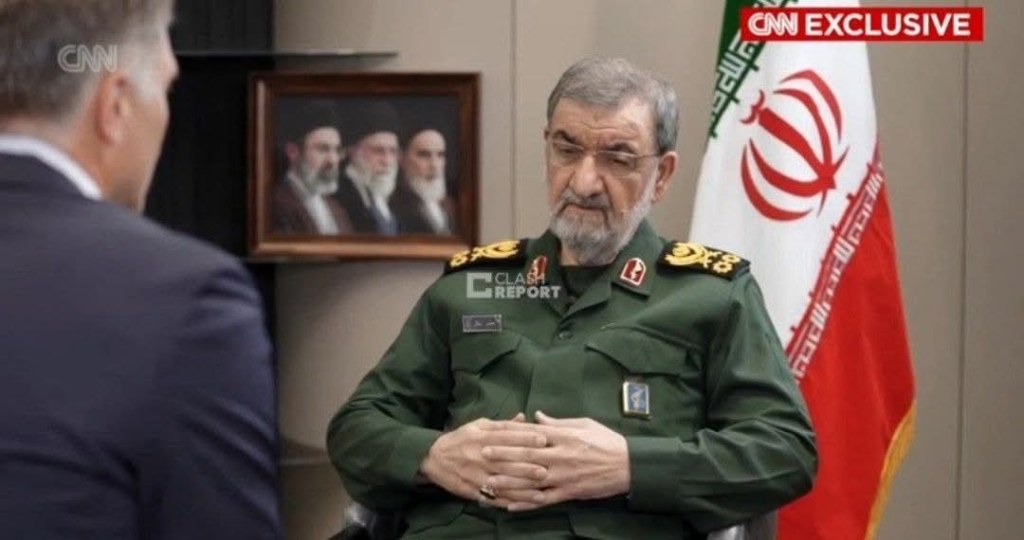
Tehran does not expect negotiations to produce a breakthrough, it wants to shape the narrative around any future escalation
My reading of Rezaee’s CNN interview is that it is primarily directed at Western audiences and the cameras, not because Tehran genuinely expects negotiations to produce a breakthrough, but because it wants to shape the narrative around any future escalation. From my perspective, Iran’s leadership appears to be operating on the assumption that a wider and longer conflict is increasingly likely. The references to negotiations and trust-building measures seem designed to demonstrate that diplomatic options were offered, while simultaneously preparing audiences for a prolonged confrontation.
I also believe many analysts underestimate the potential political consequences of a long regional war. The Gulf monarchies enjoy significant state capacity and security structures, but they are also products of a regional order that emerged under British influence and protection. In my view, there remain fundamental gaps between rulers and sections of their populations, particularly regarding political participation, identity, and the future direction of the region. The longer a major conflict drags on, the greater the pressure on existing political arrangements. If the war expands and persists for years rather than months, I would not be surprised to see challenges emerge that go beyond military confrontation and begin to affect the stability of states themselves. The biggest story may ultimately not be who wins individual battles, but whether the regional order that has existed for decades can survive the strain.
Excepts from the interview:
- “If the war continues and the naval blockade is not lifted, we will extend the war to the Indian Ocean, the Bab al-Mandab Strait, the Red Sea, and the Mediterranean.”
- “By striking those other U.S. bases, we will take the war to another dimension.”
- “The United States will undoubtedly suffer far greater losses. America’s damages will be very severe.”“
- If Trump takes the negotiations seriously, $24 billion is not a large sum for the United States. If he wants to reach an agreement with Iran, this $24 billion is a test of trust that Iran wants to have with Trump.”
- “This is a test that America must pass, and then the path will open. This is our money, not America’s money.”
The most revealing aspect of Mohsen Rezaee’s interview with CNN, like I said earlier, is not what he says about negotiations, but the audience he is saying it to.
On the surface, Rezaee presents a familiar Iranian position: threats of escalation if pressure continues, combined with a pathway toward negotiations if Washington demonstrates “trust” by releasing Iranian funds. To many Western observers, this appears to be a classic bargaining position, pressure on one side, diplomacy on the other.
However, there is strong reason to believe that Tehran itself does not expect meaningful results from negotiations. The interview appears designed primarily for cameras and for an American audience rather than as a genuine roadmap to de-escalation.
The key clue is the contradiction between the rhetoric and the strategic reality. Rezaee speaks about trust-building measures and tests that Washington must pass, yet simultaneously warns about expanding the conflict across multiple maritime theaters, including the Indian Ocean, the Bab al-Mandab Strait, the Red Sea, and potentially the Mediterranean. These are not the statements of a leadership expecting a diplomatic breakthrough in the near future. They are the statements of a leadership preparing the public for a wider confrontation.
The demand for the release of $24 billion serves a political function. Tehran knows that such a move would be extraordinarily difficult for any U.S. administration to justify domestically during an active confrontation. As a result, the proposal operates less as a realistic diplomatic expectation and more as a means of demonstrating that Iran offered a path toward compromise while placing responsibility for failure on Washington.
Viewed through this lens, the interview becomes part of a broader information campaign. The message to the American public is straightforward: there is still a chance to avoid escalation, but the burden rests on the United States. The message to regional actors is equally clear: Iran possesses escalation options that extend far beyond its own territory.
More importantly, Iran’s strategic calculations suggest that its leadership is preparing for a prolonged period of instability rather than a quick settlement. For years, Iranian military and political figures have spoken about a regional transformation in which the existing security architecture of the Middle East cannot survive indefinitely. From that perspective, current events are not viewed as a temporary crisis but as part of a larger historical process.
This helps explain why Iranian officials often appear simultaneously open to talks and resigned to conflict. Negotiations are useful for shaping international opinion, managing coalitions, and influencing political debates in Washington and Europe. But there is little evidence that Tehran believes a durable strategic understanding with the United States is imminent.
Instead, Iranian leaders appear to be operating under the assumption that the region is entering a prolonged period of confrontation whose outcome could fundamentally reshape the political map of the Middle East. In that scenario, the objective is not necessarily to achieve a near-term agreement but to endure, impose costs on adversaries, and emerge in a stronger position when a new regional order eventually takes shape.
Whether that assessment proves correct remains to be seen. But if one accepts this framework, Rezaee’s CNN interview looks less like a genuine diplomatic opening and more like strategic messaging designed for Western consumption while Iran prepares for the possibility of a long war.
The most important takeaway is that Tehran’s public references to negotiations should not automatically be interpreted as evidence that it expects negotiations to succeed. They may instead be part of a parallel effort to shape perceptions while preparing for outcomes far more disruptive than the diplomatic language suggests.
Authored By: Global GeoPolitics
If you prefer to make a one time donation in support of my work, you can do so by clicking any link below:
https://buymeacoffee.com/ggtv |
https://ko-fi.com/globalgeopolitics |
Bitcoin: 3NiK8BoRZnkwJSHZSekuXKFizGPopkE7ns


Leave a Reply