
war
-
Information Space Has Become the Decisive Battleground of 21st-Century Conflict

How the United States Exploits Information Vulnerability to Capture Nations and Why Securing Information Space is the Most Urgent National Security Imperative General News Article | June 2026 The past quarter-century of geopolitical history has been defined by a transformation that has largely escaped the attention of conventional strategic analysis. While military planners, diplomats, and… Continue reading
-
The Price Of Industrial Strategy

How China Built a Global Electric Vehicle Industry Through State Capitalism, and How Washington Answered with Tariff Wall Editorial Analysis | June 2026 (This headline image is the Geely Geome Xingyuan is a compact hatchback that sells for under $10,000) I. The Industrial Reset: China’s EV Strategy from 2009 When China formally identified new energy… Continue reading
-
The $23,000 car America cannot buy

How fifteen years of Chinese industrial policy produced an electric vehicle Detroit cannot match and why tariffs may be solving the wrong problem General News Article | June 2026 (The headline image is the Geely Geome Xingyuan is a compact hatchback that sells for under $10,000) In 2023 BYD began selling a small electric hatchback… Continue reading
-
The Memorandum of Convenience

Why the US-Iran MOU Represents Another Chapter in a Longstanding Pattern of Strategic Deception The June 2026 Memorandum of Understanding between the United States and Iran has been presented to the world as a diplomatic breakthrough. According to the 14-point text, the agreement commits both parties to the immediate and permanent termination of military operations… Continue reading
AI and Digital Control, America, China, economics, Energy, EUROPE, Financial markets, Foreign Policy, Geopolitics, iran, israel, warBRICS, Brookings Institution, color revolution, energy security, Extending Russia, Geneva Convention, geopolitical competition, international law, Iran nuclear deal, Iran Sanctions, Iran War, Israel–Iran conflict, JCPOA withdrawal, LNG exports, MOU 2026, multipolarity, munitions depletion, proxy warfare, RAND Corporation, regime change, Strait of Hormuz, treaty violations, Trump administration, unipolarity, US foreign policy, US imperialism, US military inventory, US strategic deception, US–Iran relations, Which Path to Persia -
AI Has Lost Public Trust

Why Growing Scepticism Towards Artificial Intelligence Reflects Political Economy Rather Than Fear of Technology Artificial intelligence has rapidly assumed a position once occupied by electrification, railways, telecommunications and the internet as the defining technology of its generation. Governments describe artificial intelligence as essential national infrastructure. Financial markets increasingly value companies according to their AI strategies… Continue reading
AI and Digital Control, America, economics, Financial markets, Foreign Policy, Geopolitics, Global Finance, imperialism, iran, israel, NATO, neocolonialism, reserve currency, warAI energy consumption, AI extraction, AI governance, AI labour displacement, AI ownership, AI political economy, AI regulation debate, artificial intelligence scepticism, China AI competition, cognitive labour automation, FDA disclosure, institutional credibility, Mohamed El-Erian, mRNA vaccine transparency, Pfizer vaccine data, productivity distribution, public resistance to AI, Public trust deficit, social media regulation, surveillance capitalism, technological revolution, technology and democracy, technology regulation, technology trust, The Economist AI backlash, wealth inequality -
Armenia Regime-Changed Without A Shot Fired

How the 2018 Velvet Revolution Exemplifies the US Strategy of Political Capture of a Sovereign Country The March 1992 leak of the Defense Planning Guidance to the New York Times revealed a strategic vision that would shape American foreign policy for three decades. The document, prepared by Paul Wolfowitz’s policy office, asserted that the United… Continue reading
AI and Digital Control, America, economics, Energy, EUROPE, Financial markets, Foreign Policy, Geopolitics, Global Finance, middle east, Mineral Resources, NATO, neocolonialism, politics, Russia, waradministrative capture, Armenia, Armenia elections 2026, civil society organisations, client regimes, colour revolution, democracy promotion, electoral interference, Eurasian Security, extending Russia strategy, geopolitical competition, hybrid warfare, information space, information warfare, institutional capture, International Republican Institute, National Endowment for Democracy, NATO expansion, Nikol Pashinyan, OSCE observers, political capture, regime change, Russian influence, social media control, South Caucasus, Union of Informed Citizens, US foreign policy, US-Russia rivalry, Velvet Revolution -
The Colour Revolution Playbook

How the US Captures Nations Without Firing a Shot to Disrupt Multipolarism, Extend Russia, Contain Iran and China The February 1992 draft of the Defense Planning Guidance, leaked to the New York Times and published on March 8, 1992, articulated a strategic vision that has shaped American foreign policy for three decades. The document, prepared… Continue reading
AI and Digital Control, America, economics, Financial markets, Foreign Policy, Geopolitics, Global Finance, imperialism, iran, israel, NATO, neocolonialism, politics, Russia, warArmenia Velvet Revolution, colour revolutions, Eurasian Security, extending Russia strategy, foreign interference, information warfare, multipolarity, National Endowment for Democracy, NED operations, political infiltration, regime change operations, South Caucasus geopolitics, US global strategy, US political capture, US-Iran containment, US-Russia rivalry -
China Defends Export Controls as Japan Criticizes Rare Earth Restrictions
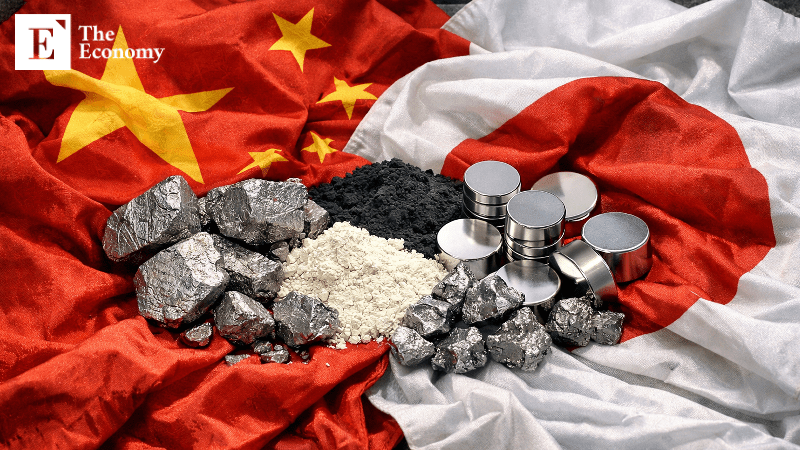
Beijing argues its measures are a restrained response to Japan’s growing military role and its position on Taiwan, while Tokyo says the restrictions are harming its economy. China has banned the export of all dual-use items to Japanese military users and for Japan’s military use. According to China’s Ministry of Foreign Affairs, the goal is… Continue reading
-
Is South Africa Witnessing a Colour Revolution?

Analysing South Africa’s March and March movement through the lens of regime change doctrine South Africa occupies a unique position in the global order. It is the only country in the BRICS+ world where the colonial management class never actually left. Political power was transferred in 1994, but the land, the mines, the banks, the… Continue reading
africa, AI and Digital Control, America, economics, Foreign Policy, Geopolitics, imperialism, israel, neocolonialism, politics, war, zimbabweAfrican geopolitics, AfriForum, anti-immigration, BRICS, colour revolution, Democratic Alliance, foreign interference, Government of National Unity, June 30 protests, March and March, migration policy, multipolar transition, National Endowment for Democracy, Operation Dudula, regime change, soft coup, south africa, South African politics, xenophobia -
The Great Pandemic Cover-Up

Leaked emails expose how a network of government agencies, global organizations, and pharmaceutical interests prepared for the next outbreak and efforts to silence dissent long before COVID-19. A collection of internal emails from the U.S. National Institutes of Health (NIH) has revealed years of planning for future pandemics involving governments, foundations, international organizations, and pharmaceutical… Continue reading
bill & melinda gates foundation, bill gates, biomedical research, conspiracy theories, COVID-19, ecohealth alliance, Government transparency, infectious disease control, Misinformation, National Institutes of Health, NIH, pandemic response, public health policy, regulatory oversight, research ethics, scientific research funding, vaccine development
