
Why the United States Seeks Control of Supply Routes Rather Than Conventional Victory
American power has repeatedly been misread during prolonged geopolitical confrontations because commentators continue measuring strategic success through the narrow lens of immediate battlefield outcomes rather than through cumulative institutional, economic, and infrastructural transformation across decades. Independent geopolitical analyst Brian Berletic argued during a May 2026 strategic commentary examining the Iran blockade and Indo-Pacific energy architecture that prevailing interpretations of American decline frequently misunderstand the long-duration character of United States strategic planning and overestimate the significance of short-term tactical setbacks. Washington rarely requires total military victory in the conventional twentieth century sense when sanctions regimes, energy disruption, proxy warfare, financial leverage, information dominance, and maritime interdiction can steadily erode competitors through accumulated costs and structural dependency. The current conflict architecture stretching from Eastern Europe through the Persian Gulf and into the Indo-Pacific increasingly resembles a coordinated campaign against Eurasian integration rather than a disconnected series of regional crises.
The military pressure directed against Iran during 2025 and 2026 demonstrates the distinction between tactical limitations and strategic intent. American naval operations in the Gulf of Oman and Strait of Hormuz did not require complete interdiction of Iranian shipping to impose severe economic disruption upon Tehran and its principal energy customers. Reports carried by Reuters and the Financial Times during April and May 2026 indicated that substantial numbers of Iranian-linked tankers either returned to port, were seized, or suffered disabling attacks while attempting to bypass the maritime blockade. Lloyd’s List and maritime insurance analysts simultaneously reported rising Gulf transit premiums and increasing reluctance among commercial carriers to enter contested waters without additional naval protection, demonstrating that partial interdiction can still impose severe commercial disruption. Partial disruption against a major energy exporter still carries profound economic consequences because energy markets react disproportionately to uncertainty, insurance costs, transit risk, and interrupted contractual reliability.
American force deployment patterns suggested that these operations had been prepared long before public declarations concerning escalation appeared in official statements. US Naval Institute reporting during March 2026 confirmed the forward deployment of expeditionary naval assets before the formal announcement of intensified blockade operations against Iranian shipping. The Marine Corps restructuring process described by BBC reporting during earlier reform programmes had already shifted substantial operational emphasis toward anti-shipping capabilities, littoral warfare, distributed maritime operations, and interdiction across contested chokepoints. Such institutional reforms require years of planning, procurement, doctrinal adjustment, and logistical preparation, which undermines interpretations presenting the confrontation with Iran as an improvised response to sudden instability.
Long-term strategic continuity across successive American administrations deserves greater attention than partisan media coverage usually permits. Donald Trump, Joe Biden, and subsequent administrations differed rhetorically on diplomatic style and alliance management, yet broad strategic assumptions regarding China, Russia, Iran, and maritime energy control remained remarkably consistent across defence planning documents, sanctions policy, naval procurement, intelligence operations, and Indo-Pacific military integration. Electoral turnover inside Washington has repeatedly altered language while preserving the underlying architecture of containment, economic pressure, and regional encirclement.
The intellectual framework underlying this continuity has existed openly within American strategic literature for many years. The Brookings Institution paper Which Path to Persia? Options for a New American Strategy toward Iran published during 2009 examined sanctions, covert destabilisation, proxy escalation, diplomatic manoeuvring, military strikes, and Israeli participation as interconnected policy instruments rather than isolated alternatives. Kenneth Pollack later acknowledged during public policy discussions hosted by the Saban Center that many of the options examined inside the report were designed as practical planning exercises for future administrations rather than purely academic speculation. Kenneth Pollack, Martin Indyk, Daniel Byman, Suzanne Maloney, Michael O’Hanlon, and Bruce Riedel outlined scenarios through which pressure could be intensified gradually while preserving diplomatic justification and international coalition management. The chapter examining potential Israeli strikes against Iran considered the political utility of maintaining formal American distance from direct escalation while still benefiting strategically from the resulting confrontation. Events across the Middle East since the Damascus consulate strike during April 2024 increasingly resemble elements previously discussed within those planning frameworks.
Comparable logic appeared within the RAND Corporation report Extending Russia: Competing from Advantageous Ground published during 2019. RAND did not present Ukraine as a likely arena for decisive Russian defeat through conventional military collapse. The report instead evaluated methods for increasing Russian expenditures, casualties, domestic strain, and geopolitical overextension through calibrated pressure. RAND acknowledged openly that lethal assistance to Ukraine could generate severe costs for Ukraine itself while still serving broader American objectives concerning Russian attrition. Subsequent developments demonstrated that Washington could regard prolonged conflict itself as strategically useful even without immediate battlefield victory.
The collapse of Syria’s remaining state coherence during late 2024 reinforced the importance of measuring these conflicts over extended historical periods. Syria had survived years of insurgency, sanctions, proxy warfare, foreign intervention, and territorial fragmentation with Russian and Iranian support preserving core state structures longer than many Western analysts anticipated. The eventual deterioration of that arrangement nevertheless illustrated how sustained economic exhaustion, infrastructure destruction, and diplomatic isolation can gradually weaken governments that appear militarily resilient during earlier phases of conflict.
Energy flows sit at the centre of this wider geopolitical struggle because industrial economies remain fundamentally dependent upon stable access to affordable fuel. Reuters reporting during 2026 indicated that more than half of Chinese imported energy requirements previously originated from Middle Eastern suppliers before intensified conflict and interdiction significantly reduced those flows. Politico analysis during March 2026 also highlighted the extraordinary dependence of Japan, South Korea, Taiwan, and the Philippines upon Middle Eastern energy imports. Those same countries simultaneously occupy central positions within the expanding American alliance system across the Indo-Pacific.
The relationship between military dependency and energy dependency increasingly appears mutually reinforcing rather than accidental. States requiring American naval protection for energy transit gradually accept deeper military integration, expanded basing agreements, procurement dependency, intelligence coordination, and industrial alignment with Washington. Security architecture and commercial infrastructure become intertwined through long-term strategic planning. American policymakers therefore possess strong incentives to preserve maritime conditions where regional allies remain reliant upon United States naval supremacy for economic survival.
Europe already experienced a comparable transformation following the deterioration of relations with Russia after 2022. Before the Ukraine conflict escalated into prolonged continental confrontation, Russian pipeline gas supplied European industry with relatively inexpensive and geographically efficient energy. The RAND report from 2019 explicitly discussed expanding American liquefied natural gas exports into European markets while acknowledging that Russian pipeline infrastructure retained major economic advantages under normal commercial conditions. Those commercial conditions changed dramatically after sanctions escalation, infrastructure sabotage, and political rupture severed much of the direct energy relationship between Europe and Russia.
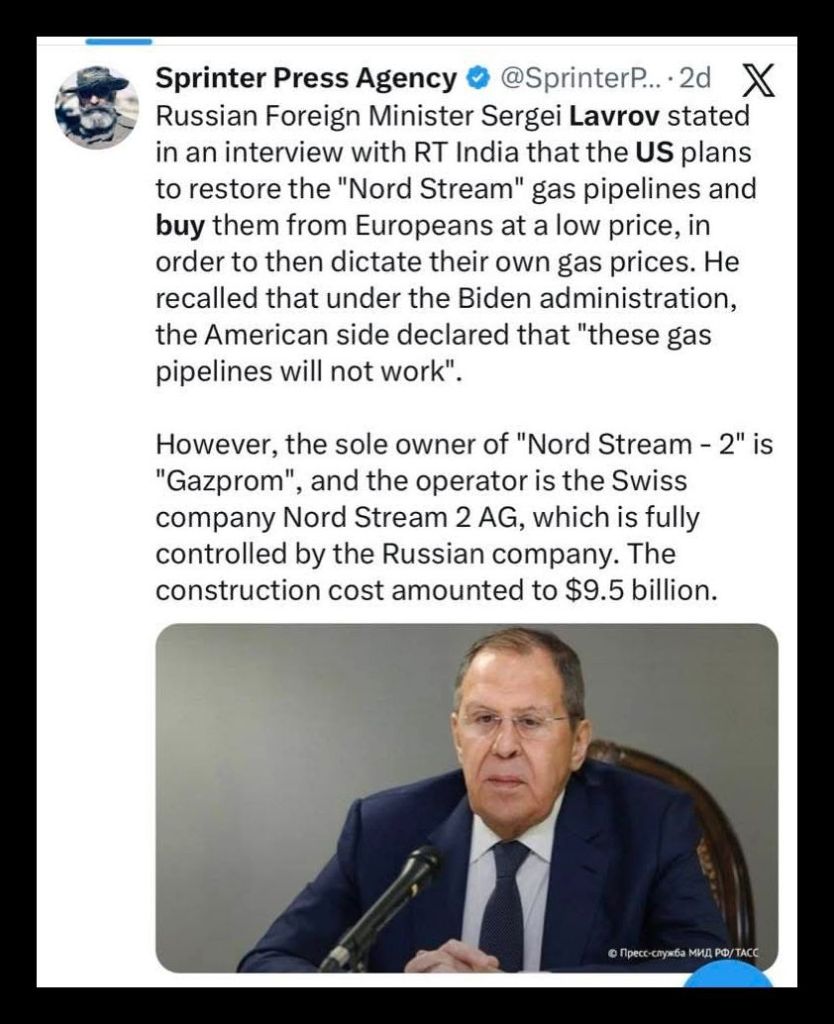
The destruction of the Nord Stream pipelines during September 2022 fundamentally altered European industrial economics. Seymour Hersh’s controversial February 2023 investigation alleging American involvement was rejected publicly by Washington, Berlin, and NATO officials, while German prosecutors later pursued alternative theories involving Ukrainian-linked operational teams, yet no final publicly accepted conclusion resolved the matter conclusively by 2026. Investigative reporting from the New York Times during December 2025 described covert operations involving Ukrainian-attributed attacks against Russian infrastructure while also detailing broader American intelligence coordination surrounding maritime operations and strategic targeting. Competing interpretations concerning responsibility for the Nord Stream sabotage continue circulating across intelligence, journalistic, and diplomatic communities, yet the strategic beneficiary of severed Russo-European energy integration remained unmistakable. American LNG exports expanded sharply while European manufacturers confronted higher energy costs, declining competitiveness, industrial contraction, and mounting fiscal strain.
German industry suffered particularly severe consequences because its manufacturing model had depended heavily upon affordable pipeline energy supporting chemicals, metallurgy, automotive production, and export-oriented heavy industry. Eurostat industrial production figures and German federal economic reports across 2023 through 2025 recorded sustained contraction within energy-intensive sectors, while BASF announced investment reductions and restructuring plans affecting major domestic operations in Ludwigshafen. BASF reduced operations within Germany while shifting investment toward markets offering lower energy costs and more stable industrial conditions. European Union industrial output weakened across several sectors during subsequent years while inflationary pressures and energy insecurity undermined domestic political stability. Such developments strengthened arguments claiming that strategic fragmentation between Europe and Russia ultimately served American geopolitical and commercial interests regardless of European economic damage.
The same strategic template increasingly appears directed toward Asia. American energy corporations and state officials promoted alternative LNG infrastructure years before intensified disruption across Middle Eastern supply routes. The Alaska LNG project received sustained political support from state and federal institutions while presenting itself explicitly as a secure alternative supplier for Asian markets vulnerable to maritime instability. Public presentations connected with the Alaska Sustainable Energy Conference emphasised secure shipping lanes, geopolitical reliability, and long-term Asian demand growth. Commercial planning therefore anticipated a future environment where Middle Eastern energy transit would appear increasingly dangerous, unreliable, or politically constrained.
Historical precedent from Latin America reinforces the argument that sanctions and geopolitical pressure frequently precede profitable American energy substitution. Colombia’s LNG import arrangements became more commercially viable after sanctions and political pressure disrupted Venezuelan gas supplies that had previously served regional markets more cheaply. Venezuela itself experienced escalating sanctions, financial isolation, diplomatic pressure, attempted regime change operations, and eventual direct confrontation while simultaneously maintaining close energy relationships with China. American intervention consistently intersected with efforts to redirect energy flows, weaken alternative suppliers, and expand Western corporate access to strategic resources.
Chinese planners have attempted reducing vulnerability through overland energy corridors bypassing vulnerable maritime chokepoints. Pipelines and transport routes crossing Myanmar and Pakistan sought to diversify supply away from the Strait of Malacca, where enormous proportions of Chinese seaborne imports remain exposed to interdiction. Instability across those corridors therefore carries substantial strategic significance. Armed conflict, insurgent activity, infrastructure sabotage, and political fragmentation within transit states impose indirect pressure upon Chinese energy security without requiring direct military confrontation between Washington and Beijing.
The Strait of Malacca itself represents one of the central pressure points within global trade geography. American military relationships with Singapore, the Philippines, Australia, Japan, and other regional partners collectively strengthen surveillance, naval coordination, and operational reach around critical maritime routes linking the Indian Ocean with East Asia. Senate Armed Services Committee hearings concerning Indo-Pacific Command posture during 2026 described increasingly integrated alliance structures connecting regional military procurement, logistics maintenance, missile defence, intelligence sharing, and industrial coordination. Admiral Samuel Paparo and senior Indo-Pacific Command officials repeatedly emphasised distributed maritime operations, integrated deterrence doctrine, and expanded allied interoperability during testimony supporting fiscal year 2027 defence appropriations.
Japan and South Korea illustrate how allied states gradually become embedded within broader American military supply architecture. Reports during late 2025 documented Japanese provision of Patriot missile interceptors supporting broader American defence requirements while South Korean facilities expanded maintenance support for United States naval logistics. Such arrangements deepen interoperability while simultaneously orienting regional industrial capacity toward American strategic priorities. Domestic economic costs inside allied countries often receive less attention than the broader narrative of collective security against regional threats.
Washington’s strategic method historically depends less upon rapid conquest than upon sustained campaigns of attrition unfolding across years or decades. Iraq survived the immediate aftermath of the 1991 Gulf War, leading many observers at the time to conclude that American objectives had failed. Subsequent sanctions devastated Iraqi civilian infrastructure, weakened state capacity, degraded public health, and isolated the country internationally throughout the following decade. United Nations estimates concerning civilian mortality during the sanctions era became central to international criticism of American policy, particularly after UNICEF reporting during 1999 estimated dramatic increases in child mortality linked to deteriorating infrastructure, medicine shortages, and sanctions-related deprivation, yet the cumulative weakening of Iraq nevertheless facilitated the eventual 2003 invasion.
Libya followed a similarly extended trajectory. Western governments maintained pressure upon Muammar Gaddafi’s administration for decades through sanctions, diplomatic isolation, intelligence operations, and periodic military confrontation before the NATO intervention during 2011 finally destroyed the Libyan state. Syria likewise endured prolonged destabilisation efforts involving regional proxies, intelligence coordination, sanctions, media campaigns, and armed insurgency before eventual state fragmentation intensified further during later years. American strategy frequently tolerates extremely long timelines when policymakers believe gradual attrition can eventually produce strategic realignment.
Information dominance forms another essential dimension of this broader system. The National Endowment for Democracy, various Western-funded civil society networks, international media partnerships, technology platforms, and digital advertising structures collectively shape political discourse across numerous countries simultaneously. Governments increasingly rely upon communication ecosystems owned, moderated, or influenced by corporations operating within the American political and regulatory environment. Algorithmic visibility, content moderation practices, advertising incentives, and coordinated messaging campaigns therefore acquire geopolitical significance extending far beyond ordinary commercial activity.
Critics argue that social media infrastructure enables subtle forms of political engineering favouring American strategic objectives under the language of democratic norms, civil society promotion, anti-disinformation measures, and digital safety governance. Defenders counter that open communication platforms remain essential for exposing corruption, documenting abuses, and resisting authoritarian censorship. Both positions contain elements requiring serious consideration because modern political mobilisation now depends heavily upon privately controlled information systems possessing unprecedented influence over public perception.
Indonesia provides a particularly revealing example because its geographic position near the Strait of Malacca grants enormous strategic importance during any confrontation involving Chinese maritime supply routes. Indonesian economic interests strongly favour stable trade relations with China, regional neutrality, and uninterrupted commercial transit. American strategic planners nevertheless possess incentives encouraging deeper Indonesian cooperation with maritime surveillance, interdiction frameworks, and alliance structures designed to constrain Chinese naval and commercial expansion. Domestic political narratives inside Indonesia therefore become directly connected with wider geopolitical competition.
The cumulative evidence suggests that current tensions involving Iran, Russia, China, and global energy routes should not be interpreted as isolated crises driven solely by immediate events. A broader pattern connects sanctions policy, maritime militarisation, infrastructure sabotage, alliance expansion, energy substitution, financial coercion, information management, and industrial realignment across multiple theatres simultaneously. American strategy appears directed toward preventing the emergence of an integrated Eurasian economic sphere capable of operating independently from Western financial systems, military influence, and energy markets.
Chinese policymakers clearly recognise elements of this pressure architecture and have accelerated efforts toward supply diversification, domestic technological development, yuan-based settlement systems, strategic reserves, overland infrastructure, and expanded partnerships across the Global South. Russia similarly redirected substantial energy exports toward Asian markets following European sanctions and political rupture. Iran pursued deeper integration with China and Russia through transport corridors, energy agreements, and defence coordination. Whether these adjustments ultimately compensate for sustained American pressure remains uncertain.
Several competing interpretations nevertheless deserve consideration before accepting any single explanatory framework too confidently. Many Western analysts argue that Russian actions in Ukraine, Iranian regional activity, Chinese military expansion, and authoritarian governance patterns independently generated the coalition responses now emerging across Europe and Asia. Supporters of American strategy contend that alliance expansion reflects genuine security concerns among neighbouring states rather than manipulation directed from Washington. European governments themselves actively supported sanctions against Russia despite severe economic consequences, indicating that strategic choices cannot always be reduced entirely to American coercion.
Questions also remain concerning the long-term sustainability of American pressure strategies. Former United States Treasury officials and international monetary analysts have warned periodically that excessive reliance upon sanctions and financial weaponisation could accelerate efforts by rival powers to construct parallel settlement systems reducing future dependence upon dollar-clearing infrastructure and Western-controlled banking mechanisms. Extensive sanctions regimes encourage targeted states developing alternative payment systems, domestic manufacturing capacity, parallel logistics networks, and non-Western financial institutions. BRICS expansion, bilateral currency arrangements, Chinese industrial policy, and growing scepticism toward dollar dependence demonstrate wider international reactions against perceived American overreach. Prolonged instability within global energy markets additionally threatens Western economies already burdened by debt, inflationary pressures, demographic strain, and industrial decline.
American power nevertheless retains extraordinary advantages frequently underestimated by both critics and adversaries. The United States controls dominant financial infrastructure, maintains unmatched global military logistics, influences major technology platforms, possesses extensive alliance networks, and continues attracting capital during periods of international instability. Washington also benefits from oceans insulating the continental homeland from many direct consequences suffered across Europe, the Middle East, and Asia during geopolitical confrontation. Competitors therefore face the difficult challenge of resisting American pressure while remaining deeply integrated within systems historically shaped by American institutional power.
Underestimating the strategic patience embedded within American foreign policy has repeatedly produced analytical errors across several generations. Policymakers in Washington often pursue objectives through cumulative disruption rather than immediate victory, accepting prolonged instability if adversaries experience greater long-term exhaustion. Such methods impose enormous humanitarian, economic, and political costs upon affected societies while preserving plausible deniability concerning final strategic intent. The emerging struggle over global energy flows, maritime chokepoints, industrial dependency, and Eurasian integration increasingly reflects that same approach operating across multiple regions simultaneously.
Whether this strategy ultimately succeeds against China remains uncertain because the scale of Chinese industrial capacity, population size, technological adaptation, and state planning exceeds previous American adversaries confronted through comparable methods. Yet the assumption that Washington has already failed because immediate collapse or surrender never materialised misunderstands the historical character of American strategic conduct. Pressure campaigns unfolding across decades cannot be measured accurately through isolated headlines, temporary battlefield developments, or short electoral cycles. The contest now emerging concerns the future organisation of global energy, trade, industrial production, and political alignment across the twenty-first century international system.
Authored By: Global GeoPolitics
Thank you for visiting. This is a reader-supported publication. If you believe journalism should serve the public, not the powerful, and you’re in a position to help, becoming a PAID SUBSCRIBER truly makes a difference. Alternatively you can support by way of a cup of coffee:
https://buymeacoffee.com/ggtv |
https://ko-fi.com/globalgeopolitics |
Bitcoin: 3NiK8BoRZnkwJSHZSekuXKFizGPopkE7ns
References
Berletic, B. (2026) Do Not Underestimate the United States: Engineered Chaos and the Strategic Demolition of Global Energy Order. Video commentary and analytical transcript, 11 May 2026.
Brookings Institution (2009) Which Path to Persia? Options for a New American Strategy toward Iran. Washington DC: Saban Center for Middle East Policy, Brookings Institution.
Byman, D., Indyk, M., Maloney, S., O’Hanlon, M., Pollack, K. and Riedel, B. (2009) Which Path to Persia? Options for a New American Strategy toward Iran. Washington DC: Brookings Institution.
BBC News (2023) ‘US Marines abandon tanks to prepare for China conflict’, BBC News. Available at: BBC News (Accessed: 16 May 2026).
Financial Times (2026) ‘Iran-linked tankers continue bypassing US maritime blockade’, Financial Times, 21 April.
Politico (2026) ‘Asia’s dangerous dependence on Middle Eastern energy’, Politico, March 2026.
RAND Corporation (2019) Extending Russia: Competing from Advantageous Ground. Santa Monica, CA: RAND Corporation.
Reuters (2026) ‘Chinese energy imports from Middle East disrupted by Gulf conflict’, Reuters, April 2026.
Reuters (2026) ‘US seizes Iranian-linked tankers in Asian waters’, Reuters, 23 April.
Seymour Hersh (2023) ‘How America Took Out The Nord Stream Pipeline’, Substack, 8 February. Available at: Seymour Hersh Substack (Accessed: 16 May 2026).
The Defense Post (2025) ‘Japan supplies Patriot missile interceptors to the United States’, The Defense Post, November 2025.
The New York Times (2025) ‘The Separation: Inside the Unravelling US-Ukraine Partnership’, The New York Times, December 2025.
UNICEF (1999) Iraq Surveys Show ‘Humanitarian Emergency’. New York: United Nations Children’s Fund.
United States Senate Armed Services Committee (2026) Posture of United States Indo-Pacific Command and United States Forces Korea in Review of the Defence Authorization Request for Fiscal Year 2027. Washington DC: US Government Publishing Office.
US Naval Institute News (2026) ‘USS Tripoli deployed to Middle East before blockade escalation’, USNI News, 13 March.
US Naval Institute News (2026) ‘Green Berets test maritime strike drones in Luzon Strait exercises’, USNI News, 3 May.
Eurostat (2025) Industrial Production Statistics for Energy-Intensive Manufacturing Sectors. Luxembourg: European Commission.
BASF (2024) Annual Report 2024. Ludwigshafen: BASF SE.
Stars and Stripes (2025) ‘South Korea expands maintenance support for US Navy logistics fleet’, Stars and Stripes, December 2025.
Lloyd’s List (2026) ‘Insurance premiums rise sharply for Gulf shipping routes amid Iranian blockade tensions’, Lloyd’s List, May 2026.


Leave a comment